

Hey there! As a supplier of Fiber Laser Cutting Machines, I often get asked if these machines can be integrated with other production equipment. Well, the short answer is yes, and in this blog, I'll dive deep into how and why it's a great idea.
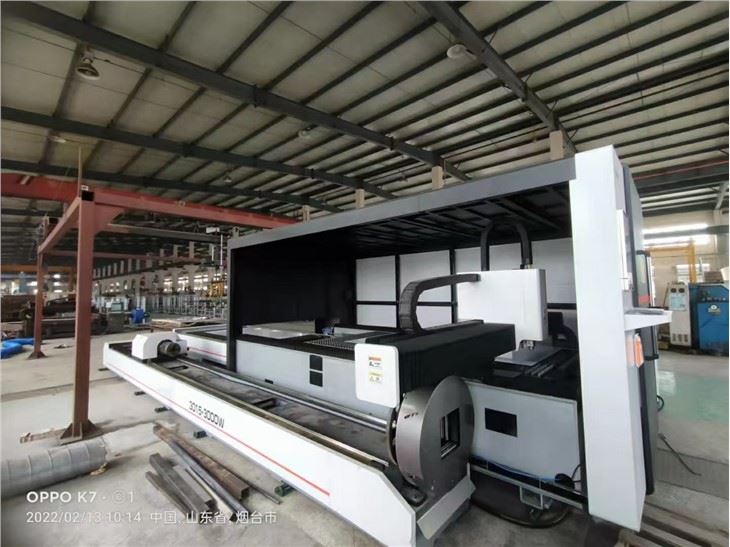
First off, let's talk about what a fiber laser cutting machine is. It's a super powerful tool that uses a high - energy laser beam to cut through various materials like metal, with precision and speed. Our Fiber 3000w Metal Laser Cutting Machine is a prime example. It can handle thick metal sheets with ease, making it a popular choice in many manufacturing setups.
Now, the integration part. Why would you want to integrate a fiber laser cutting machine with other production equipment? One big reason is efficiency. By connecting it to other machines in your production line, you can create a seamless workflow. For instance, if you have a bending machine right after the laser cutting machine, the cut pieces can be directly transferred for bending without any manual handling in between. This not only saves time but also reduces the risk of errors and damage to the parts.
Let's take a look at some common types of production equipment that can be integrated with a fiber laser cutting machine.
Material Handling Equipment
Conveyor systems are a great addition. They can be used to feed materials into the laser cutting machine automatically. Instead of manually loading each sheet of metal, the conveyor can do it for you. This is especially useful when dealing with large volumes of materials. Once the cutting is done, the conveyor can also carry the cut pieces away to the next stage of production. Our 2000w 3000w Metal Cutting Fiber Laser Cutting Machine can work really well with conveyor systems, as it has a high - speed cutting capability that matches the flow of the conveyor.
Welding Machines
If your production process involves welding the cut pieces together, integrating a welding machine with the laser cutting machine is a smart move. After the laser cuts the parts, they can be directly sent to the welding station. This way, you can have a continuous production line from cutting to welding. The precision of the laser cutting ensures that the parts fit together perfectly for welding, resulting in a high - quality finished product.
CNC Machining Centers
CNC machining centers can be used for further processing of the cut parts, such as drilling holes or adding surface finishes. By integrating the fiber laser cutting machine with a CNC machining center, you can create a multi - step production process in one place. For example, the laser cuts the basic shape of a metal part, and then the CNC machining center adds the necessary details. Our Steel Plate And Pipe Fiber Laser Cutting Machine can provide the initial cut parts that are ready for CNC machining, thanks to its accurate cutting performance.
But how do you actually integrate these machines? Well, there are a few key things to consider.

Communication Protocols
All the machines need to be able to communicate with each other. Most modern production equipment uses standard communication protocols like Ethernet/IP or Modbus. You need to make sure that your fiber laser cutting machine and the other equipment you want to integrate support the same protocol. This way, they can exchange information about things like the status of the cutting process, the position of the parts, and the next steps in the production line.
Software Integration
Software plays a crucial role in the integration process. You'll need to use software that can control and coordinate all the machines. Some fiber laser cutting machines come with their own software that can be integrated with the software of other equipment. This software can be used to program the entire production process, from the initial cutting to the final finishing steps.
Physical Layout
The physical layout of your production floor is also important. You need to arrange the machines in a way that allows for easy transfer of materials between them. For example, if you're using a conveyor system, make sure there's enough space for it to move freely between the laser cutting machine and the next piece of equipment.
There are also some challenges that you might face during the integration process.
Compatibility Issues
Not all machines are compatible with each other out of the box. You might run into issues with things like different power requirements, different sizes of parts that the machines can handle, or different operating speeds. It's important to do your research and make sure that the machines you choose are compatible before you start the integration process.
Training
Your employees will need to be trained on how to operate the integrated system. They'll need to understand how the different machines work together and how to troubleshoot any problems that might arise. This can take some time and resources, but it's essential for the smooth running of your production line.
Despite these challenges, the benefits of integrating a fiber laser cutting machine with other production equipment far outweigh the difficulties. It can lead to increased productivity, improved quality, and lower costs in the long run.
If you're in the market for a fiber laser cutting machine and are thinking about integrating it with your existing production equipment, we're here to help. We have a wide range of high - quality fiber laser cutting machines that are designed to be easily integrated with other equipment. Whether you need a Fiber 3000w Metal Laser Cutting Machine for heavy - duty cutting or a 2000w 3000w Metal Cutting Fiber Laser Cutting Machine for more general - purpose use, we've got you covered.
If you have any questions or want to discuss how our machines can be integrated with your production setup, don't hesitate to reach out. We're always happy to have a chat and help you find the best solution for your business.
References:
- "Manufacturing Automation: Principles, Practice, and Economics" by David A. Dornfeld
- "Industrial Engineering and Management" by Benjamin S. Blanchard