

Can a fiber laser cutting machine cut curved surfaces? That's a question I get asked a lot as a supplier of fiber laser cutting machines. In this blog, I'm gonna break down the ins and outs of using these machines for curved surface cutting.
First off, let's talk about what a fiber laser cutting machine is. It's a super - cool piece of tech that uses a high - energy laser beam generated by a fiber laser source to cut through various materials. It's widely used in industries like automotive, aerospace, and metal fabrication because it offers high precision, speed, and efficiency.
Now, the big question: can it cut curved surfaces? The short answer is yes, but it's not as straightforward as cutting a flat piece of metal. There are a few factors that come into play when attempting to cut curved surfaces with a fiber laser cutting machine.
1. Machine Capability
Modern fiber laser cutting machines are getting more and more advanced. Many of them come with multi - axis motion control systems. These systems allow the laser head to move in multiple directions, which is crucial for cutting curved surfaces. For example, a 5 - axis or 6 - axis fiber laser cutting machine can tilt and rotate the laser head, enabling it to follow the contour of a curved surface. Our Fiber 3000w Metal Laser Cutting Machine is equipped with a high - precision multi - axis control system that can handle complex curved cutting tasks.

2. Material Considerations
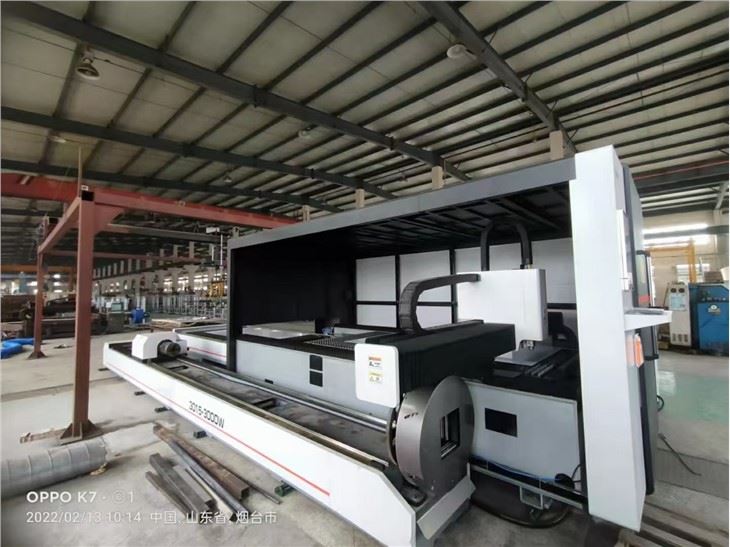
The type of material being cut also affects the ability to cut curved surfaces. Different materials have different melting points, thermal conductivities, and reflectivities. Metals like steel and aluminum are commonly cut with fiber laser cutting machines. Steel, for instance, has a relatively high melting point, so the laser needs to have enough power to melt through it. When cutting a curved surface of steel, the machine has to adjust the laser power and cutting speed according to the curvature to ensure a clean cut. Our Steel Plate And Pipe Fiber Laser Cutting Machine is designed to handle a variety of metals, including those used in curved surface applications.
3. Software and Programming
Software plays a huge role in curved surface cutting. You need special CAD/CAM software to design the cutting path for the curved surface. This software allows you to create a 3D model of the part you want to cut and then generate a cutting program for the fiber laser cutting machine. The program tells the machine how to move the laser head, adjust the power, and control the speed. With the right software, you can achieve very accurate curved cuts. Our 2000w 3000w Metal Cutting Fiber Laser Cutting Machine is compatible with advanced CAD/CAM software, making it easier for you to program curved cutting paths.
4. Challenges in Curved Surface Cutting
Even with all the advanced technology, there are still some challenges when cutting curved surfaces. One of the main challenges is maintaining a consistent focus. As the laser head moves along the curved surface, the distance between the laser head and the material may change. This can cause the laser beam to lose focus, resulting in a poor - quality cut. To overcome this, some machines use auto - focusing systems that adjust the focus of the laser beam in real - time.
Another challenge is dealing with sharp curves. Sharp curves require the laser head to change direction quickly, which can put a strain on the machine's motion control system. If the machine can't keep up with the rapid changes in direction, it may lead to uneven cuts or even damage to the material.
5. Applications of Curved Surface Cutting
There are many applications where cutting curved surfaces with a fiber laser cutting machine is essential. In the automotive industry, it's used to cut body panels and engine components with complex shapes. In the aerospace industry, it's used to manufacture parts like turbine blades and wing structures. The ability to cut curved surfaces accurately helps these industries achieve high - performance and lightweight designs.
6. Tips for Successful Curved Surface Cutting
If you're planning to cut curved surfaces with a fiber laser cutting machine, here are some tips to help you get the best results:
- Choose the right machine: Make sure the machine you choose has the appropriate number of axes and a high - precision motion control system.
- Optimize the cutting parameters: Adjust the laser power, cutting speed, and gas pressure according to the material and the curvature of the surface.
- Use high - quality software: Invest in good CAD/CAM software and make sure you're familiar with how to use it to generate accurate cutting programs.
- Test and calibrate: Before starting a large - scale production, do some test cuts on a sample piece of material. This will help you fine - tune the cutting parameters and ensure the machine is working properly.
In conclusion, a fiber laser cutting machine can definitely cut curved surfaces, but it requires the right machine, proper programming, and careful consideration of the material and cutting parameters. If you're in the market for a fiber laser cutting machine for curved surface cutting, we're here to help. We offer a wide range of high - quality fiber laser cutting machines that are suitable for various applications. Whether you need a machine for small - scale prototyping or large - scale production, we have the right solution for you.
If you're interested in learning more about our fiber laser cutting machines or have any questions about curved surface cutting, don't hesitate to contact us. We'd be happy to have a chat with you and discuss your specific needs. Let's work together to take your manufacturing capabilities to the next level.
References
- Industrial Laser Handbook, Third Edition. This book provides in - depth knowledge about laser cutting technology, including the principles and applications of fiber laser cutting machines.
- Journal of Laser Applications. This journal publishes research papers on the latest developments in laser cutting technology, including curved surface cutting.