

How to adjust the cutting parameters of a tube laser cutting machine?
As a supplier of tube laser cutting machines, I understand the importance of properly adjusting the cutting parameters to achieve optimal results. In this blog post, I will share some key insights and practical tips on how to adjust the cutting parameters of a tube laser cutting machine effectively.
Understanding the Basics of Tube Laser Cutting
Before delving into the details of parameter adjustment, it's essential to have a basic understanding of how tube laser cutting works. A tube laser cutting machine uses a high - power laser beam to melt and vaporize the material of the tube, creating a precise cut. The quality of the cut depends on several factors, including the laser power, cutting speed, assist gas pressure, and focal position.
Laser Power
Laser power is one of the most critical parameters in tube laser cutting. It determines the energy available to melt and vaporize the material. Generally, higher laser power is required for thicker tubes or materials with high melting points. However, using excessive laser power can lead to over - melting, rough edges, and increased heat - affected zones.
To adjust the laser power, you need to consider the type and thickness of the tube. For thin - walled tubes (less than 2mm), a lower laser power may be sufficient. For example, when cutting thin stainless - steel tubes, a laser power of around 500 - 1000W might be appropriate. As the tube thickness increases, you should gradually increase the laser power. For tubes with a thickness of 5 - 10mm, a laser power of 2000 - 3000W could be more suitable.
It's also important to note that different materials have different absorption rates of laser energy. For instance, aluminum has a relatively low absorption rate compared to carbon steel. So, when cutting aluminum tubes, you may need to increase the laser power slightly to achieve a clean cut.
Cutting Speed
Cutting speed is another crucial parameter that affects the quality of the cut. A proper cutting speed ensures that the laser beam has enough time to melt and vaporize the material without causing excessive heat accumulation. If the cutting speed is too slow, the material may over - heat, resulting in rough edges and a wider heat - affected zone. On the other hand, if the cutting speed is too fast, the laser may not be able to fully penetrate the tube, leading to incomplete cuts.
The optimal cutting speed depends on the laser power, tube thickness, and material type. As a general rule, for a given laser power, the cutting speed should decrease as the tube thickness increases. For example, when using a 1KW Fiber Laser Pipe Cutting Machine to cut a 2mm thick carbon - steel tube, a cutting speed of around 3 - 5 meters per minute might be appropriate. But when cutting a 5mm thick carbon - steel tube, the cutting speed may need to be reduced to 1 - 2 meters per minute.
You can also adjust the cutting speed based on the type of cut. For straight cuts, a relatively higher speed can be used compared to complex shapes or cuts with small radii. When making cuts with small radii, the cutting speed should be reduced to ensure the laser can follow the path accurately.
Assist Gas Pressure
Assist gas plays a vital role in tube laser cutting. It helps to blow away the molten material from the cutting area, preventing it from re - solidifying on the cut surface and improving the cut quality. The most commonly used assist gases are oxygen, nitrogen, and air.
Oxygen is often used for cutting carbon - steel tubes. It reacts with the metal during the cutting process, releasing additional heat and facilitating the cutting. The oxygen pressure should be adjusted according to the tube thickness. For thin carbon - steel tubes (less than 3mm), an oxygen pressure of around 0.2 - 0.5MPa may be sufficient. For thicker tubes (more than 5mm), the oxygen pressure may need to be increased to 0.5 - 1MPa.
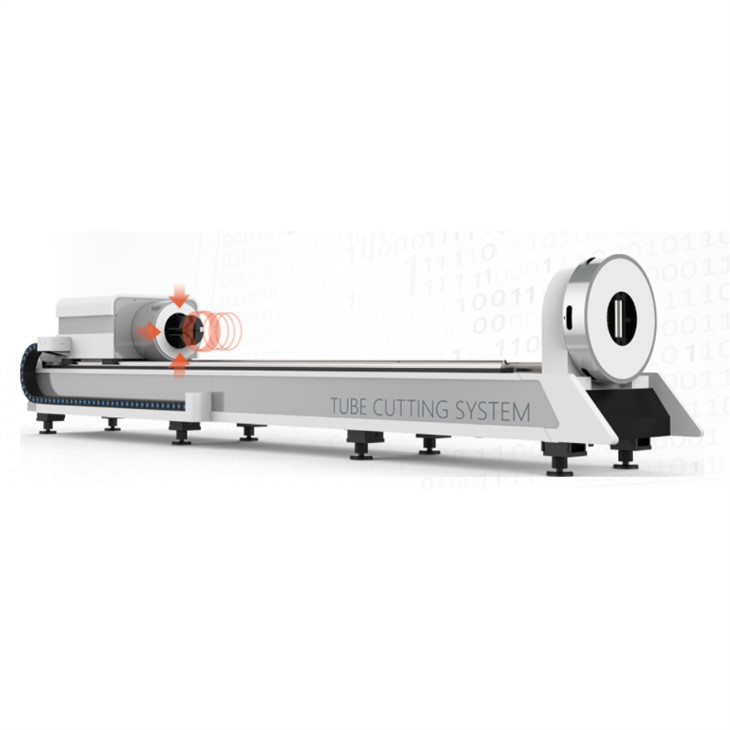

Nitrogen is mainly used for cutting stainless - steel and aluminum tubes. It provides a clean, oxidation - free cut. The nitrogen pressure is typically lower than that of oxygen. For stainless - steel tubes, a nitrogen pressure of 0.8 - 1.5MPa is commonly used.
Air can be used as an economical alternative for some less - demanding applications. However, the cut quality may not be as good as when using oxygen or nitrogen. The air pressure usually ranges from 0.6 - 1MPa.
Focal Position
The focal position of the laser beam is critical for achieving a precise cut. The laser beam should be focused at the appropriate position within the tube wall. If the focal point is too high, the cut may be wider at the top and narrower at the bottom. If the focal point is too low, the cut may be wider at the bottom and narrower at the top.
The optimal focal position depends on the tube thickness and the type of cut. For thin - walled tubes, the focal point is often set at or near the surface of the tube. For thicker tubes, the focal point may need to be adjusted deeper into the tube wall. You can use the machine's control system to adjust the focal position accurately.
Practical Steps for Parameter Adjustment
- Initial Setup: Start with the recommended parameters provided by the machine manufacturer. These parameters are usually based on common tube materials and thicknesses.
- Test Cuts: Make test cuts on a sample tube of the same material and thickness as the actual workpiece. Examine the cut quality, including the edge smoothness, kerf width, and heat - affected zone.
- Fine - Tuning: Based on the results of the test cuts, make small adjustments to the parameters. For example, if the cut edges are rough, you can try reducing the cutting speed or adjusting the focal position.
- Iterative Process: Repeat the test cuts and parameter adjustments until you achieve the desired cut quality. Keep a record of the parameters used for each test cut to track the changes and find the optimal settings.
Case Studies
Let's take a look at some real - world examples of parameter adjustment.
Case 1: Cutting Square Stainless - Steel Tubes
A customer wanted to cut 3mm thick square stainless - steel tubes using our Square Pipe Fiber Laser Cutting Machine. We started with a laser power of 1500W, a cutting speed of 4 meters per minute, a nitrogen pressure of 1MPa, and the focal point set at the surface of the tube. The initial test cuts showed some rough edges. We then reduced the cutting speed to 3 meters per minute and adjusted the focal point slightly deeper into the tube wall. After these adjustments, the cut quality improved significantly, with smooth edges and a narrow heat - affected zone.
Case 2: Cutting Round Aluminum Tubes
Another customer needed to cut 5mm thick round aluminum tubes with our Metal Tube Fiber Laser Cutting Machine. We initially set the laser power at 2000W, the cutting speed at 2 meters per minute, and the nitrogen pressure at 1.2MPa. The first test cuts had some incomplete penetrations. We increased the laser power to 2500W and reduced the cutting speed to 1.5 meters per minute. This resulted in clean, complete cuts.
Conclusion
Adjusting the cutting parameters of a tube laser cutting machine is a complex but essential process. By understanding the basic principles of laser cutting and following the practical steps outlined above, you can achieve high - quality cuts on various types of tubes.
If you are interested in our tube laser cutting machines or need more advice on parameter adjustment, please feel free to contact us. We are always ready to assist you in finding the best solutions for your cutting needs.
References
- “Laser Cutting Technology Handbook”, published by a well - known industry publisher.
- Technical manuals provided by the leading tube laser cutting machine manufacturers.