

Hey there! As a supplier of Steel Laser Cutters, I often get asked this one burning question: "What is the maximum thickness of steel that a steel laser cutter can cut?" Well, let's dive right into it and break it down.
First off, it's important to understand that the maximum cutting thickness of a steel laser cutter isn't set in stone. It depends on a bunch of factors. One of the most crucial factors is the power of the laser. Generally speaking, the higher the power of the laser, the thicker the steel it can cut.
For low - power laser cutters, say those with a power of around 500 - 1000 watts, they're usually good for cutting thin steel sheets. These can typically handle steel with a thickness of up to about 1 - 3 mm. They're great for small - scale projects, like making jewelry or small metal parts where precision is key, but you don't need to cut through really thick material.
If you step up to a medium - power laser cutter, with a power in the range of 1500 - 3000 watts, you're looking at being able to cut steel that's around 3 - 10 mm thick. This kind of power is suitable for a wider range of applications, such as in the automotive industry for making smaller components, or in the construction industry for fabricating decorative metal elements.
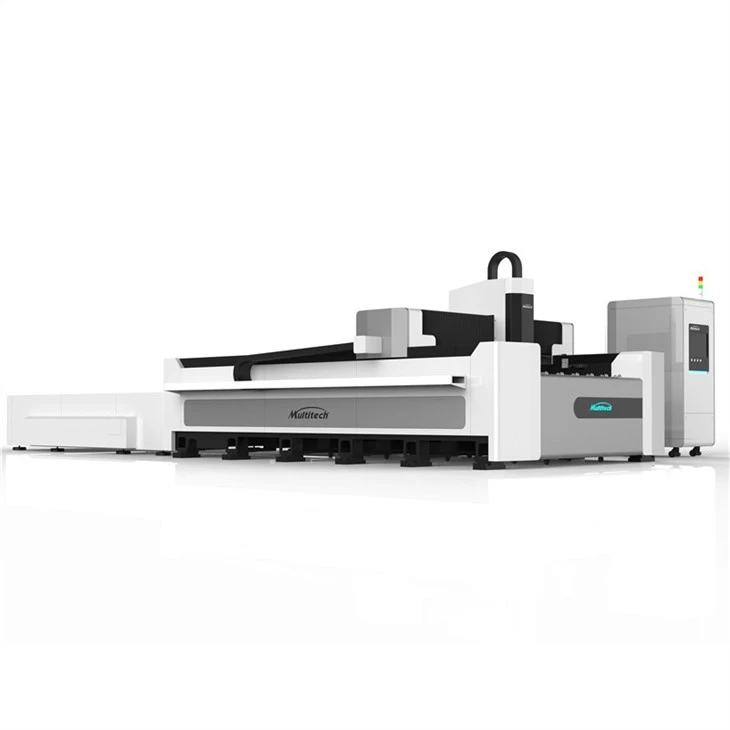
Now, when we talk about high - power laser cutters, things get really interesting. High - power fiber laser cutters high power fiber laser cutter, with powers of 6000 watts or more, can cut steel that's extremely thick. In some cases, they can handle steel up to 25 - 30 mm thick or even more. These are the heavy - hitters in the world of laser cutting and are used for large - scale industrial projects, like manufacturing heavy machinery or building large metal structures.
But power isn't the only thing that matters. The type of steel also plays a big role. Different types of steel have different properties, such as their hardness, density, and melting point. For example, stainless steel is generally harder to cut than mild steel. Stainless steel has a higher melting point and is more resistant to heat, which means that you might need a more powerful laser cutter to achieve the same cutting thickness as you would with mild steel.
Another factor is the quality of the laser cutter itself. A well - made, high - quality laser cutter will be more efficient at cutting through steel. It'll have better beam quality, which means the laser can be focused more precisely on the material, allowing for cleaner and more efficient cuts. Also, the cooling system of the laser cutter is important. A good cooling system can prevent the laser from overheating during long - term operation, which is crucial when you're trying to cut thick steel.
The cutting speed also affects the maximum thickness that can be cut. If you want to cut through thick steel, you'll usually have to slow down the cutting speed. This gives the laser more time to melt and vaporize the material. However, if you try to cut too fast through thick steel, the laser might not be able to fully penetrate the material, resulting in an incomplete or poor - quality cut.
Let's take a closer look at some real - world applications and how the maximum cutting thickness comes into play. In the aerospace industry, precision is of the essence. They often use Laser CNC Machine for Metal to cut thin to medium - thickness steel for making aircraft components. These components need to be lightweight but also strong, so the laser cutters used are carefully calibrated to cut the right thickness of steel with high precision.
On the other hand, in the shipbuilding industry, they deal with much thicker steel. Large ships are made up of massive steel plates, and high - power laser cutters are used to cut these thick plates to the right shape and size. The ability to cut thick steel accurately is essential for ensuring the structural integrity of the ship.
Now, if you're in the market for a steel laser cutter, you need to think about your specific needs. If you're a small business or a hobbyist, a low - to medium - power laser cutter might be all you need. But if you're involved in large - scale industrial production, you'll definitely want to consider a high - power laser cutter.
We also offer Laser Cutting Stainless Steel Machine that are specifically designed to handle the challenges of cutting stainless steel. These machines are equipped with the latest technology to ensure clean, precise cuts, even through the toughest stainless steel.

If you're still not sure which laser cutter is right for you, or if you have any questions about the maximum cutting thickness for your specific project, don't hesitate to reach out. We're here to help you make the best decision for your business. Whether you're just starting out or looking to upgrade your existing equipment, we can provide you with the information and support you need.
In conclusion, the maximum thickness of steel that a steel laser cutter can cut depends on a variety of factors, including laser power, type of steel, quality of the cutter, cutting speed, and more. By understanding these factors, you can choose the right laser cutter for your needs and ensure that you get the best results for your projects. So, if you're interested in purchasing a steel laser cutter, get in touch with us, and let's start a conversation about how we can help you take your business to the next level.
References
- Industrial Laser Applications Handbook
- Laser Cutting Technology: Principles and Practices