

Hey there! As a supplier of 3000*1500mm Metal Laser Cutters, I often get asked about the productivity of these machines on a daily basis. So, I thought I'd write this blog to break it down for you.
First off, let's understand what we mean by "productivity." In the context of a metal laser cutter, productivity is mainly about how much metal you can cut accurately in a day. It's not just about speed; it's also about the quality of the cuts and the complexity of the designs you're working with.
Factors Affecting Productivity
There are several factors that can influence the daily productivity of a 3000*1500mm Metal Laser Cutter.
1. Material Type and Thickness
Different metals have different properties, and this affects how fast the laser can cut through them. For example, cutting through thin sheets of aluminum is much quicker than cutting thick steel plates. A 6000w Fiber Laser Cutting Machine [/fiber-laser-cutting-machine/metal-sheet-laser-cutting-machine/6000w-fiber-laser-cutting-machine.html] can handle a wide range of materials and thicknesses, but the cutting speed will vary.
Let's say you're using an Aluminum Fiber Laser Cutting Machine [/fiber-laser-cutting-machine/metal-sheet-laser-cutting-machine/aluminum-fiber-laser-cutting-machine.html] to cut 1mm thick aluminum. The laser can zip through it at a relatively high speed, maybe around 30 - 40 meters per minute. But if you're dealing with 10mm thick steel, the speed could drop to just 1 - 2 meters per minute.
2. Laser Power
The power of the laser is a crucial factor. Higher power lasers can cut through thicker materials faster. A high power fiber laser cutter [/fiber-laser-cutting-machine/metal-sheet-laser-cutting-machine/high-power-fiber-laser-cutter.html] can significantly boost productivity. For instance, a 6000w laser can cut through materials much quicker than a 3000w laser.

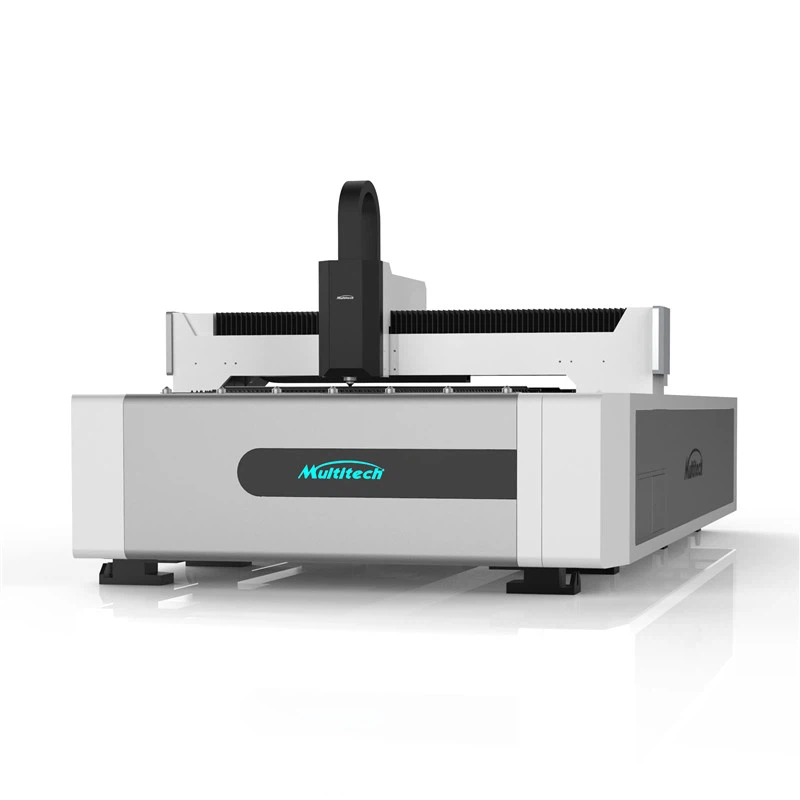
3. Cutting Complexity
If you're cutting simple shapes like squares or circles, the machine can work at a pretty good pace. But when you start dealing with intricate designs with lots of curves and fine details, the cutting speed has to slow down to ensure accuracy. This means that jobs with complex designs will take longer and reduce the overall daily productivity.
4. Machine Setup and Maintenance
Proper machine setup is essential for optimal productivity. If the laser cutter isn't calibrated correctly, it can lead to slower cutting speeds and poor quality cuts. Regular maintenance also plays a big role. A well - maintained machine will run smoothly and efficiently, while a neglected one may experience breakdowns and slowdowns.
Calculating Daily Productivity
To get a rough idea of the daily productivity of a 3000*1500mm Metal Laser Cutter, let's assume a few things.
Let's say we're using a 6000w laser cutter to cut 3mm thick mild steel. The average cutting speed for this setup is around 8 - 10 meters per minute.
A typical working day is around 8 hours, but we need to account for some downtime for machine setup, material loading and unloading, and maintenance. Let's assume we have about 6 hours of actual cutting time.
In 6 hours (or 360 minutes), at a cutting speed of 9 meters per minute, the machine can cut approximately 360 * 9 = 3240 meters of material.
Now, if we're cutting simple rectangular shapes, and the width of the cut pieces is 50mm (or 0.05 meters), we can calculate the number of pieces. The area of material cut per day is 3240 * 0.05 = 162 square meters.
However, this is a very simplified calculation. In real - world scenarios, there will be more factors at play, such as the nesting of parts on the metal sheet to minimize waste.
Real - World Productivity Examples
Let's look at a couple of real - world examples to give you a better idea.
Example 1: A Furniture Manufacturer
A furniture manufacturer uses a 3000*1500mm Metal Laser Cutter to cut steel parts for their products. They mainly cut 2mm thick steel sheets for chair frames and table legs. The parts are relatively simple in design.
With a 6000w laser cutter, they can achieve a cutting speed of about 15 meters per minute. In an 8 - hour day, after accounting for 2 hours of downtime, they have 6 hours of cutting time. So, they can cut 6 * 60 * 15 = 5400 meters of material. If the width of the cut pieces is 80mm (0.08 meters), they can produce around 5400 * 0.08 = 432 square meters of cut parts per day.
Example 2: A Jewelry Maker
A jewelry maker uses the same 3000*1500mm Metal Laser Cutter to cut intricate designs on thin gold and silver sheets. Since the designs are very complex, the cutting speed is much slower, maybe around 2 - 3 meters per minute.
In an 8 - hour day with 6 hours of actual cutting time, at a speed of 2.5 meters per minute, they can cut 6 * 60 * 2.5 = 900 meters of material. If the width of the cut pieces is 20mm (0.02 meters), they can produce around 900 * 0.02 = 18 square meters of cut parts per day.
How to Maximize Productivity
If you want to get the most out of your 3000*1500mm Metal Laser Cutter, here are some tips:
- Choose the Right Laser Power: Select a laser cutter with the appropriate power for the materials and thicknesses you work with most often.
- Optimize Nesting: Use nesting software to arrange the parts on the metal sheet in the most efficient way possible. This reduces waste and allows you to cut more parts in less time.
- Regular Maintenance: Keep your machine in top condition by following the manufacturer's maintenance schedule. This includes cleaning the lenses, checking the alignment, and replacing worn - out parts.
- Training: Make sure your operators are well - trained. A skilled operator can set up the machine correctly, adjust the cutting parameters, and troubleshoot problems quickly.
Wrapping Up
The productivity of a 3000*1500mm Metal Laser Cutter per day depends on a variety of factors, including material type, thickness, laser power, cutting complexity, and machine setup. By understanding these factors and taking steps to optimize them, you can significantly increase the output of your laser cutter.
If you're interested in learning more about our 3000*1500mm Metal Laser Cutters or want to discuss your specific cutting needs, feel free to reach out. We're here to help you find the best solution for your business.
References
- Laser Cutting Handbook
- Industry reports on metal laser cutting technology