

Hey there! As a supplier of Laser Metal Cutters, I've seen firsthand how crucial the control system is in these machines. In this blog, I'm gonna break down the role of the control system in a Laser Metal Cutter and why it's so important.
What is a Laser Metal Cutter?
Before we dive into the control system, let's quickly go over what a Laser Metal Cutter is. It's a machine that uses a high - powered laser beam to cut through various types of metal. These cutters are super versatile and can be used for different applications, from simple sheet metal cutting to more complex tube cutting. We offer a range of Laser Metal Cutters, like the Steel Laser Cutter and the Raucus Fiber Laser Cutter.
The Basics of a Control System
The control system in a Laser Metal Cutter is like the brain of the machine. It's responsible for managing and coordinating all the different components and functions of the cutter. It takes in input from the operator, processes that information, and then sends out commands to the various parts of the machine to make sure everything works smoothly.
Precision and Accuracy
One of the most important roles of the control system is to ensure precision and accuracy in cutting. When you're working with metal, even the slightest error can lead to a defective product. The control system uses advanced algorithms and sensors to precisely position the laser beam. It can control the speed, intensity, and focus of the laser, allowing for extremely accurate cuts. For example, if you're cutting a complex shape out of a metal sheet, the control system will guide the laser to follow the exact path you've programmed, ensuring that every curve and angle is cut perfectly. This level of precision is crucial in industries like automotive, aerospace, and electronics, where high - quality components are a must.
Automation and Efficiency
Another key role of the control system is to enable automation. With a good control system, you can program the Laser Metal Cutter to perform repetitive tasks automatically. This not only saves time but also reduces the risk of human error. You can set up the machine to cut multiple pieces of the same shape or pattern without having to manually adjust the settings for each one. For instance, if you need to cut a large number of identical metal brackets, you can program the cutter once, and it will keep cutting them with consistent quality. This automation also increases the overall efficiency of the production process. The control system can optimize the cutting path to minimize waste and reduce the time it takes to complete a job.
Safety
Safety is a top priority when working with Laser Metal Cutters, and the control system plays a vital role in this area. It has built - in safety features that monitor the operation of the machine and protect the operator. For example, the control system can detect if there's a problem with the laser, such as a power surge or a malfunction, and immediately shut down the machine to prevent any potential hazards. It can also control the access to the cutting area, ensuring that only authorized personnel can operate the machine. Additionally, the control system can monitor the temperature and other environmental factors around the machine to prevent overheating or other safety issues.
Compatibility and Integration
In today's manufacturing environment, it's important for machines to be able to integrate with other systems. The control system in a Laser Metal Cutter can be designed to be compatible with different software and hardware platforms. This means that you can connect the cutter to your existing production management system, such as an ERP (Enterprise Resource Planning) system. This integration allows for seamless data transfer and communication between different parts of the production process. For example, you can send cutting instructions directly from your design software to the Laser Metal Cutter's control system, eliminating the need for manual data entry.
Monitoring and Maintenance
The control system also provides valuable monitoring and maintenance capabilities. It can keep track of the machine's performance, such as the number of cuts made, the power consumption, and the wear and tear of different components. This data can be used to predict when maintenance is required, reducing the risk of unexpected breakdowns. For example, if the control system detects that the laser tube is starting to degrade, it can alert the operator to schedule a replacement before it fails completely. This proactive approach to maintenance helps to keep the machine running smoothly and reduces downtime.

Flexibility
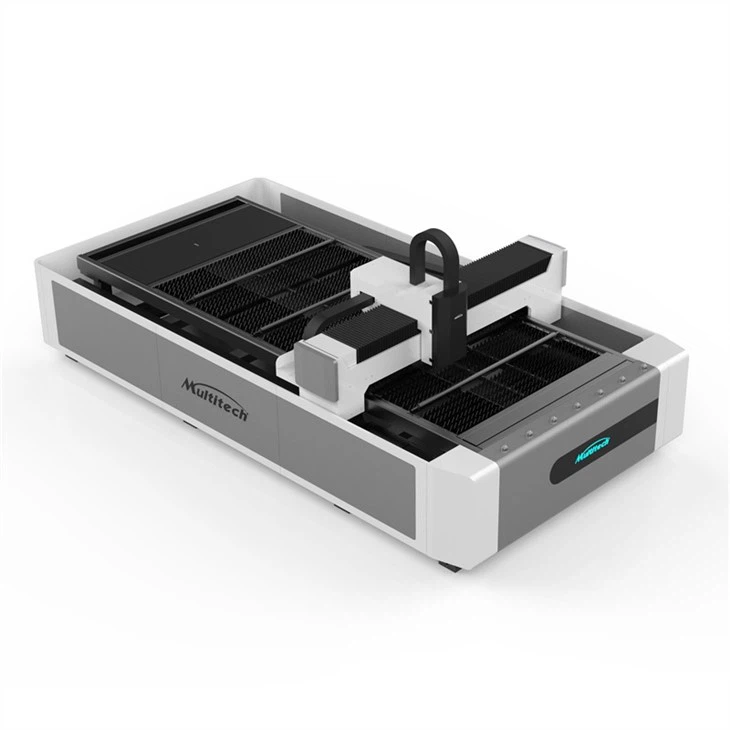
A good control system offers flexibility in terms of the types of materials and cutting operations it can handle. Our Fiber Laser Cutting Machine for Tube Cutting is a great example. The control system can be adjusted to work with different types of metals, such as steel, aluminum, and copper. It can also handle different thicknesses of metal sheets and tubes. Whether you're doing simple straight cuts or complex 3D cuts, the control system can adapt to your specific requirements.
User - Friendliness
Finally, the control system should be user - friendly. It should have an intuitive interface that allows operators to easily program and operate the machine. A well - designed control system will have clear menus, easy - to - understand icons, and helpful prompts. This makes it easier for new operators to learn how to use the Laser Metal Cutter and reduces the learning curve. It also means that experienced operators can work more efficiently, as they can quickly access the functions they need.
Conclusion
In conclusion, the control system is an essential part of a Laser Metal Cutter. It plays a crucial role in ensuring precision, accuracy, automation, safety, compatibility, and flexibility. Whether you're a small - scale manufacturer or a large - scale industrial producer, having a high - quality control system in your Laser Metal Cutter can make a big difference in your production process.
If you're interested in learning more about our Laser Metal Cutters and how the control system can benefit your business, don't hesitate to reach out. We're here to help you find the right solution for your specific needs. Let's have a chat and see how we can work together to take your production to the next level.
References
- Laser Cutting Technology: Principles and Applications, John Wiley & Sons
- Handbook of Laser Materials Processing, Springer