
Jinan Itech Machinery - a Professional Enclosed Fiber Laser Cutter Manufacturer
Founded in 2003, we are a high-tech enterprise integrating R&D, design, production, maintenance and marketing. We have a high level of professionalism and service system.
Variety of Products
We can provide customers with fiber laser cutting machines, plasma cutting machines, metal plate laser cutting machines, plate and pipe laser cutting machines, pipe laser cutting machines, enclosed fiber laser cutting machines and other products. They can be used for cutting a variety of plates and pipes.
Rich Market Experience
Our products are sold to more than 120 countries and regions including the United States, Canada, Australia, Europe, Southeast Asia, and Africa. At the same time, we have provided OEM services to more than 30 manufacturers.
Professional Service
We provide 24-hour service, 365 days a year, including design, installation, training and maintenance. We provide pre-sales and mid-sales services in a one-to-one model by professional sales managers. For after-sales service, we also have English-speaking engineers in a one-to-one model.
Multiple Honors
In 2013, our company was awarded the title of "Advanced Woodworking Machinery Manufacturing Enterprise" by the China Machinery Industry Association. In 2016, we were rated as "Service Star of International Trade Industry" by Shandong Provincial International Trade Organization.
-

Laser Cutting Machine With Full Cover
Working area:1300*2500mm/1500*3000mm/2000*4000mm/2000*6000mm. Type of laser: Fiber. Laser source: Add to Inquiry -
High Power Enclosed Fiber Laser Cutter
Close-loop laser cutting control system, auto focus, high-speed piercing and automatic tracing edge Add to Inquiry -
Double Table Fiber Laser Cutter
Powerful cutting technology database to achieve faster processing efficiency and excellent cutting Add to Inquiry -
Pipe Laser Cutting Machine
Fiber Laser Cutting Machine is mainly made of carbon steel for its machine body. It has high Add to Inquiry -
Fully Enclosed Fiber Laser
We offer laser cutting machines that are fabricated with the latest technology to our valuable Add to Inquiry -
Metal Laser Cutting Machine
Powerful cutting technology database to achieve faster processing efficiency and excellent cutting Add to Inquiry -
Fiber Laser Cutting Machine with Full Cover
Working area:1300*2500mm/1500*3000mm/2000*4000mm/2000*6000mm. Type of laser: Fiber. Laser source: Add to Inquiry -
Fiber Laser Cutting Machine with Exchange Table
1. Working area: 1500x3000mm, optional:1300x2500mm,1500x3000mm,1500x6000mm,etc.. 2. Laser Add to Inquiry -
Laser Cutting Machine with Full Cover
Working area:1300*2500mm/1500*3000mm/2000*4000mm/2000*6000mm. Type of laser: Fiber. Laser source: Add to Inquiry


Brief Introduction to Enclosed Fiber Laser Cutters
Enclosed fiber laser cutter adopts a full protective cover design, which improves the cleanliness of the working environment and personal safety. Compared with traditional cutting methods, this fiber laser cutting machine has obvious advantages, such as high-quality beam, high photoelectric efficiency, low maintenance, etc. Its closed design completely isolates the processing structure, processing materials, etc. from the operators, minimizing the risk of accidents. At the same time, this design can also reduce the spillage of smoke and dust.
Main Components of Enclosed Fiber Laser Cutters
*Laser Source: Enclosed fiber laser cutting machines use a high-power fiber laser source to produce an intense and focused laser beam for cutting. Fiber lasers are known for their efficiency and reliability.
*Laser Head: The fiber laser cutting head receives the laser beam and converts it into the cutting surface. The laser beam passes through a nozzle that sprays a compressed gas, such as nitrogen or oxygen. The distance between the cutting head and nozzle, the intensity of the beam, and the speed of the laser beam and cutting head all affect cut quality.
*Focusing Lens: Laser cutting machine focusing lenses come in different sizes to perform different jobs. Each lens is identified by inch measurements. This measurement does not refer to the size of the lens. Instead, it refers to the focal length from the material you are cutting. Each lens will produce a different spot size on the material you are cutting.
*Laser Focusing System: A metal-cutting laser is most powerful when it is focused on the smallest area. Focus is related to the focal length of the lens. A lens with a smaller focal length has a tighter focus and shorter depth. This is why shorter length lenses are better for detailed work. Lenses with longer focal lengths have greater focus and greater depth.
*Air Assist Gases: The most common air assist gases are oxygen, nitrogen, and air. In rare cases, argon gas can be used. The main function of the air assist gas is to spray the heated material for laser cutting.
*Cooling System: A cooling system is connected to the closed fiber laser cutting machine to cool the laser source and cutting head that may be damaged by high heat. The cooler automates the cooling process by maintaining the laser at an optimal temperature of 22-23 degrees Celsius. There are two main types of chillers: air chillers and Freon chillers. The air cooler cannot cool below room temperature. They may not have automatic monitoring or warning features. Freon chillers can cool down to below room temperature.
*Computer Control System: The control system controls the cutting head position, nesting, power size and cutting accuracy. Without a high-quality controller, you won't be able to get the complex and detailed results you need.
*Software and Cutting Files: Laser cutting software is used to program fiber laser metal cutting machines. A good software will make it easy to control every aspect of your laser cutting operation, which will increase your productivity and make operating your laser cutter much easier. CYPCUT is one of the best laser cutting software options for sheet metal cutting. For higher power cutting above 6kW we recommend using HYPCUT software instead. A good laser cutting software must have an intuitive user interface that gives you complete control over the operation process.
*Ventilation/Exhaust/Dust Removal Components: Fiber laser cutting machines produce large amounts of dust and fumes that are harmful to breathing. The cut material will be blown away and will need to be disposed of. Proper ventilation and dust collection are important for the safety of laser cutting machine operators. An exhaust system that uses filters removes particles from the air and expels the air outside or sends it to a location of your choice.
*Enclosed Enclosure: Fiber laser cutting machines can have enclosed cabinets or open workbenches. Open machines (sometimes called flatbeds) can be a safety hazard in certain situations. You may need to purchase additional safety equipment. Enclosed fiber laser cutting machines can avoid these dangers. Fully enclosed design provides a safe working environment. Not only does it protect the operator from the laser beam, it also contains the smoke and debris generated during the cutting process.
Features of Enclosed Fiber Laser Cutters

Material Compatibility
The fully enclosed CNC fiber laser cutting machine can cut a variety of materials, including stainless steel, carbon steel, aluminum, copper, brass, etc. The laser's ability to focus on a small spot enables complex cuts in these materials.

High Cutting Speed
Fiber lasers are known for their fast cutting speeds, which can significantly reduce production time. This is especially valuable for high-volume manufacturing.

Minimal Maintenance
Fully enclosed CNC fiber laser cutting machines require minimal maintenance, resulting in less downtime and lower operating costs.

Software Compatibility
Fully enclosed CNC fiber laser cutting machines are often compatible with CAD/CAM software, making it easy to import designs and precisely control the cutting path.

Energy Efficiency
Fiber lasers are more energy efficient than other laser technologies and are cost-effective in terms of power consumption.
Scalability
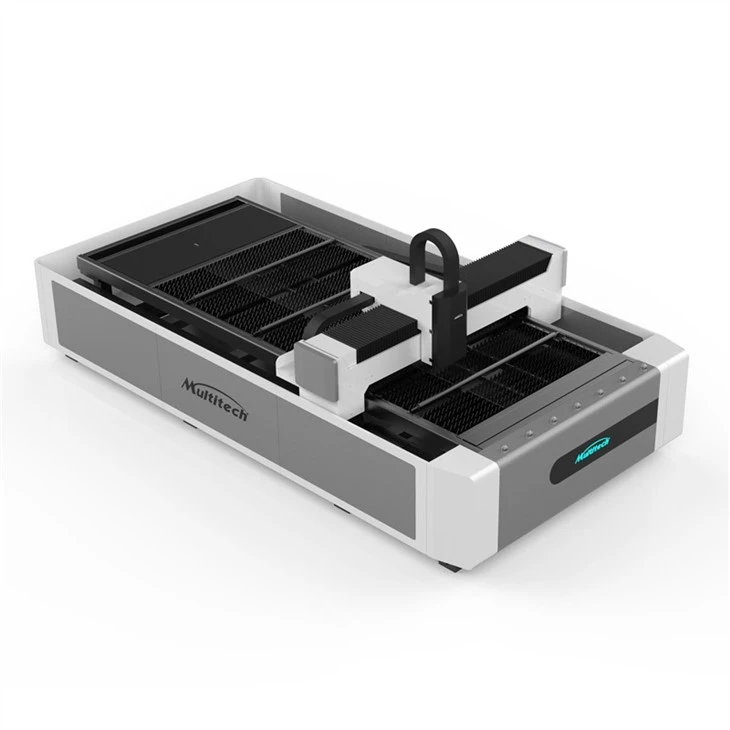
Depending on your production needs, these fully enclosed CNC fiber laser cutting machines are available in a variety of size and power options, allowing for scalability to meet specific requirements.
Advantages of Enclosed Fiber Laser Cutters
Precision and Accuracy
The fully enclosed fiber laser cutting machine is very accurate in cutting various materials because it is equipped with an advanced fiber laser generator. This high-precision fiber laser technology enables complex designs and fine details, and it ensures clean edges and good shape.
Versatility
Fiber laser cutting machines can cut deeply into a variety of materials and metals, such as aluminum, stainless steel, brass, copper, plastic, wood, composite materials, and more. This versatility makes it an ideal cutting device for industries as diverse as electronics, aerospace, automotive, signage and jewelry.
Speed and Efficiency
The enclosed fiber laser cutter has high and ultra-fast cutting speeds. As a result, it significantly reduces production time. They cut and shape materials quickly and efficiently, reducing manufacturing costs. They also consume less power and are more energy efficient. These advantages can reduce operating costs.
Non-Contact Cutting
Enclosed fiber lasers differ from CO2 laser cutting technology in that they have fewer moving parts. This reduces downtime, lowers maintenance requirements and lowers operating costs. Thanks to a non-contact process, the material being cut and processed does not come into direct contact with the cutting tool, eliminating the chance of damage or deformation of the metal or material. This also reduces the frequency of cutting tool changes.
Applications of Enclosed Fiber Laser Cutters
01/
Auto Parts Manufacturing
Enclosed fiber laser cutting machines can be integrated into automated automotive parts production lines. This can increase productivity. It can be programmed to perform complex cutting patterns and works perfectly with robotic systems. Fiber laser cutting machines provide superior cutting capabilities and are irreplaceable tools in modern manufacturing. Fiber laser cutting and forming metal parts are widely used in automotive manufacturing, such as body panels, chassis, bodies, exhaust systems, brackets and engine components.
02/
Aerospace Industry
In the aerospace industry, fiber laser cutting machines are used to manufacture precision parts. They are commonly used to design different contours and complex shapes for various components such as fuselage structures, turbine components and aircraft interior elements. Materials suitable for fiber laser beams include titanium, aluminum alloys, stainless steel and composite materials.
03/
Electronic Product
Enclosed fiber lasers can help cut circuit boards, electrical enclosures, and electronic components. These beams can create intricate patterns with sharp edges and precise cuts without causing any damage to the surrounding area.
04/
Medical Instruments
Fiber laser cutting machines can be used to produce medical devices and instruments. They can precisely cut materials such as stainless steel, titanium and various plastics to create components such as surgical instruments, implants, medical tubing and diagnostic equipment.
05/
Jewelry Industry
In the jewelry industry, enclosed fiber lasers can be used to engrave and shape precious metals such as gold, silver, and platinum. They can create intricate patterns, designs and personalized engravings on jewelry pieces.
06/
Advertising
Fiber laser cutting machines can be used for advertising and signage as they can precisely cut letters, logos, intricate designs, displays, custom signage and promotional materials, etc.
Factors to Consider When Purchasing an Enclosed Fiber Laser Cutter
Budget
Determine your budget for purchasing a laser metal cutting machine, taking into account the initial investment as well as any additional costs for installation, training, maintenance and support. The budget directly affects the configuration of the machine. If your budget is limited and your main goal is to cut sheet metal, then you can go for a single-platform laser metal cutting machine. If you have a larger budget, you can choose a fully enclosed fiber laser cutting machine.
Material
Choose the right laser cutter based on the material you want to cut. If you frequently cut metal, then fiber laser metal cutting machine is your best choice, such as cutting iron, carbon steel, stainless steel, etc. Due to the particularity of the material itself, it will lead to unstable operation and destructive automatic shutdown during the processing, and even cause great damage to the laser and shorten the life of the laser. You also need to consider the thickness of the material. Make sure the machine you choose is suitable for your material requirements.
Power and Capability
Machines with higher power can generally cut thicker materials and have faster cutting speeds. Check the machine's specific capabilities, such as its maximum thickness for bevel cutting or 3D cutting. At present, many fiber cutting laser machines have reached 60,000w, which can meet the cutting needs of most thicknesses.
Cutting Area and Bed Size
Determine the cutting area and bed size required for your application. Make sure the machine can handle the size of the material you want to process. The most common working area is 3050*1530mm, which is what we often call the 3015 model laser metal cutting machine. Other models: 4020, 6025, 6020, etc.
Cutting Speed and Efficiency
Evaluate the machine's cutting speed and efficiency. Higher cutting speeds increase productivity while reducing production time. to extend production time. To improve efficiency, look for a fiber laser cutting machine with automatic functions, which will save you a lot of time and labor costs.
Precision and Accuracy
The precision and accuracy of fiber cutting laser machines are mainly due to servo motors and linear guides, which can provide precise and accurate cutting. You'll also want to check the machine's repeatability and tolerance levels.
Software and Control System
To streamline your production, look for fiber laser cutting machines with user-friendly software and systems. Many CNC fiber laser cutting machine systems all use CYPCUT control system, which is a set of software specially developed for the laser cutting industry. It is easy to use, rich in functions, and suitable for various processing techniques.
Maintenance and Support
You'll also want to consider the machine's maintenance requirements and the availability of technical help. Check whether the manufacturer or supplier provides training, maintenance and spare parts support. This will help you save a lot of unnecessary time and costs.
Important Safety Tips of Enclosed Fiber Laser Cutter
Many businesses outsource their fabrication projects to a laser cutting company. This can be a wise move if they don’t have the proper equipment, financial resources or trained staff to do the job themselves. But if you’re ready to purchase a machine to bring your fiber laser cutting projects in house, here are four factors to keep in mind regarding safety.
Designate or Hire a Laser Safety Officer
When your business operates a fiber laser cutting machine, certain safety regulations must be in place. Lasers are classified one through four, which determine their level of risk for harm. Class I is safer than Class IV, which can cause serious damage. A Laser Safety Officer (LSO) is an employee that is specialized in lasers and laser safety. Their job is to ensure that lasers are used and maintained safely by either performing a necessary task or ensuring it is performed by someone else. Though the assignment of an LSO is not typically required with a Class I or II laser, businesses should consider it, as even lower classified lasers can cause damage. In some cases, an employee may be designated as the LSO and must undergo proper training, whereas other companies may hire a professional LSO.
Enclosure
Fiber lasers can be purchased as open or closed machines. Since fiber lasers emit a potentially harmful beam, at certain classification levels they should be enclosed to prevent a safety hazard. If your fiber laser is closed within the machine already, you won’t need to worry about this. If the laser machine is open, you may need to purchase laser curtains to create an enclosure. Anyone’s eye could catch a wayward beam as they walk past. If they aren’t wearing proper eyewear, there could be serious consequences.
Eye Protection
Protecting your eyes from the harsh ray of a laser beam and its reflection is crucial. Safety goggles are a smart choice for protecting your eyes, and some lasers even come with them. It’s best to confirm that the goggles are suitable for protection from that specific laser’s rays, and the necessary information should be etched on the goggle’s frame. In addition to protecting your eyes, it is also important to protect your skin, as lasers can burn skin too.
Ventilation
Fiber lasers give off gases. These gases and particulates can be harmful to the lungs, depending upon what is being cut. Many of us know to cover our eyes when using a laser, but it is also important to protect the air we’re breathing. There are certain materials that, when cut with a laser, produce noxious gases that can lead to serious health problems. One such example is PVC pipe, which releases chlorine gas when cut. Though not all materials release noxious gases, it’s important to have proper ventilation no matter your operation size.
Several Types of Bad Materials for Laser Cutting
Laser cutting is a powerful tool that enables easier, faster manufacturing across all sectors of industry. It is part of the explosion of CAD/CAM, automation, and advanced materials in the industrial revolution. Not all materials, however, lend themselves to this processing method. Some resist, and others offer more dramatic and/or messy outcomes. These bad materials to use for laser cutting are listed below:
ABS
ABS (acrylonitrile butadiene styrene) does not volatilize under laser cutting but tends to melt and burn. Cut edges are melted and fused. ABS thermal/oxidative decay products contain a wide range of toxins, including: cyanide, phenol, phenyl cyclohexane, and benzene derivatives, etc. ABS is also generally considered to be a fire risk because the lack of removal of material by char/volatility leads to considerable local heating and ignition.
Epoxy
Epoxy resins (or polyepoxides) are very ill-suited to laser cutting or engraving. The quality of results is generally considered poor and gas byproducts are highly toxic. Though hydrogen cyanide is widely discussed as a byproduct, quality research on “typical” epoxies in thermal degradation lists “H2, CO, CH4, C2H6, C2H4, C3H6 and C3H8, ethane, ethylene, propylene, and propane” and not HCN. However, epoxies are a wide family, differentiated by catalysts and details of pre-polymer manufacture, so HCN cannot be ruled out as a byproduct. It’s worth noting that polyester resins are sometimes mistakenly referred to as epoxies, while they are chemically unrelated. While polyesters are much more difficult to use, they respond better to laser cutting, so a thorough understanding of the materials you want to cut is central to achieving good outcomes.
Polypropylene
Polypropylene is often listed as unsuited for laser cutting. Polypropylene tends to melt and fuse during cutting which results in residues overheating and smoking. However, the smoke is not considered particularly harmful, other than as a mild irritant. A filtered extraction system will usually address this aspect. Cut quality can be improved (and smoking reduced) by effective air assistance.
PVC (Poly Vinyl Chloride)/Artificial Leather/Leather/Vinyl
PVC’s thermal degradation releases chlorine gas and hydrogen chloride once dissolved in moisture. While these damaging and very toxic byproducts can, in principle, be removed by extraction and good quality filtration, the harmful effects on equipment and risk to operators make this material unsuited to laser cutting.
Fiberglass
In benchtop equipment, fiberglass is considered a no-cut material. Few, if any, small machines are capable of cutting the glass fiber component well. The (widely used) resins are described as “releasing toxic gases.” Most fiberglass (GRP, glass-reinforced polyester) is not epoxy bonded but uses polyester resins, which are more commonly considered cuttable. However, polyester resins are a broad family, and much fiberglass material will not be identified easily by resin type. Avoiding cutting fiberglass composites on small and modestly ventilated machines is a good choice.
Polycarbonate
Thin PC is practical for cutting. In sections greater than 1 mm, however, melt/fusion and heat-affected zone (HAZ) discoloration (yellowing) is significant. However, higher power machines (in the kW range) are reported to successfully cut PC. The higher power encourages more vaporization and therefore less heat transfer to the bulk, from melt residues.
HDPE/Milk Bottle Plastic
HDPE cuts very poorly. It makes a melted, fused mess and is not considered suitable for laser cutting by benchtop machines. Machines with considerably higher power are likely able to volatilize more of the material, reducing the melting heat transferred into the HAZ. Aggressive air assistance is helpful.
Glued Materials
“Glued” is a broad term, and a deeper analysis is required. Plywood is a glue-laminated board made of alternating grain veneers. It is usually bonded with phenolic resin and, because the resin layers are very thin, it generally cuts well. Phenolics release formaldehyde when cut, so good extraction and a carbon filter mask are must-haves. MDF is also a commonly phenolic bonded board, though made of compressed fibers rather than veneers. It is safe and effective to cut, with extraction and a filter mask. Wooden components bonded with PVA (polyvinyl acetate) adhesives are safe to cut. Cyanoacrylate adhesive bonded materials, however, produce severely irritating fumes when heated. Extraction and a breathing mask with closed-eye protection are required. If the glue requires cutting properties that differ greatly from the matrix and is present in gap-filling quantities, it can be hard to find compromise settings that enable both cuts in the same pass.
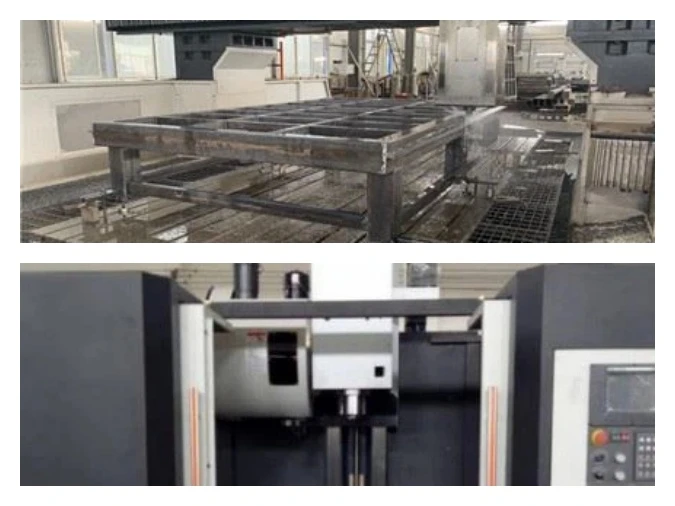
Production Equipment
The picture below is our production equipment:
Ultimate Guide
Q: Does a fiber laser cutter require an enclosed housing?
A: Fiber lasers can be purchased as open or closed machines. Because fiber lasers emit potentially harmful beams, they should be enclosed at certain classification levels to prevent safety hazards. If your fiber laser is enclosed within the machine, you don't need to worry about this.
Q: What are the fumes produced by enclosed fiber laser cutters?
A: The airborne "smoke" produced during the laser cutting process is actually a cloud of extremely fine dust particles smaller than 10 microns, which can be inhaled into the lungs and endanger workers' health.
Q: How to ventilate an enclosed laser cutting machine?
A: Simply slide the flexible tubing through the laser system's exhaust port and tighten the hose clamp. It is crucial to use the correct type of flexible ducting. Only aluminum is used for this part of the exhaust system. Never use any type of plastic hose, especially one with a coil inside.
What should you pay attention to when using a closed fiber laser cutting machine?
Individuals must wear personal protective equipment to ensure their own safety. Manufacturers should also wear thick gloves when operating machines to avoid potential burns.
What should you pay attention to when using a closed fiber laser cutting machine?
Individuals must wear personal protective equipment to ensure their own safety. Manufacturers should also wear thick gloves when operating machines to avoid potential burns.
Q: Will fiber laser hurt people's eyes?
A: Yes, fiber lasers radiate in the infrared spectrum, which is invisible to the human eye. Intense fiber laser radiation is in the visible spectrum but is invisible to humans and is particularly dangerous to the eyes.
Q: What is the life expectancy of a enclosed fiber laser?
A: Unlike CO2 lasers, there are no blowers or moving parts in fiber lasers. Therefore, fiber lasers require no additional maintenance. The operating life of a fiber laser is determined by the lifetime of its diode laser pump, which is estimated to be 100,000 hours.
Q: Are the fumes produced by enclosed fiber laser cutting machines toxic?
A: Laser cutters produce highly toxic fumes, vapors and particles from the substrate. Air contaminants can damage machinery and harm your health. Engineering controls must be implemented prior to use and materials must be compatible with the equipment.
Q: How much ventilation does an enclosed fiber laser cutting machine require?
A: Your manufacturer will recommend an exhaust that is rated using two variables: air volume moved (CFM) and air pressure (static pressure). The laser manufacturer will specify the necessary exhaust fan needs to be a 400 CFM fan at 6 inches of pressure.
Q: Can an enclosed laser cutting machine be used indoors?
A: You can use an enclosed laser cutter indoors if you have a proper ventilation system. Whatever material you are laser cutting or engraving creates fumes, which must be removed from the laser cabinet quickly and safely.
Q: How long do enclosed fiber lasers last?
A: The general lifespan of a fiber laser cutting machine is about 100,000 hours. However, this cycle varies from fiber laser cutting machine to fiber laser cutting machine. This happens because the mean time between failures (MTBF) varies depending on the fiber laser cutting machine.
Q: Which is better, CO2 laser or enclosed fiber laser?
A: If you want to mark metal, you will need to purchase a sealed fiber laser. If you want to mark organic materials such as textiles, wood or cardboard, a CO2 laser is the best choice. If your application is metal laser cutting, you will most likely need a high-power CW (continuous wave) fiber laser.
Q: What is the difference between infrared lasers and enclosed fiber lasers?
A: Infrared (IR) lasers, like enclosed fiber lasers, are solid-state lasers that use laser diodes to generate light. However, unlike fiber lasers, it does not use optical fibers but relies on air as the medium. The diode generates light which is then reflected by a reflector and converged using a convex lens.
Q: What are the main dangers of enclosed laser cutting machines?
A: Hazards associated with laser cutters include the potential for fire and the production of dangerous and/or irritating combustion products. Laser Cutting Machines High-power lasers can cause damage to the eyes and skin, so they must be contained within the cutting machine.
Q: How much oxygen do enclosed fiber lasers use?
A: In terms of consumption, oxygen cutting requires a pressure of 2 bar and a consumption of approximately 10 m3/h. Nitrogen cutting requires a pressure of 22/30 bar and a consumption of approximately 40 to 60/120 m3/h. Nitrogen laser cutting speed is 30% slower than oxygen laser cutting.
Q: Do enclosed laser cutters produce smoke?
A: Yes, essentially, when a laser beam interacts with various materials, it emits chemical vapors, aerosols, or smoke. The Laser Safety Council explains how high temperatures cause the surrounding air to expand during cutting.
Q: Does a closed laser cutting machine consume a lot of power?
A: For example, if the laser power of a closed laser equipment is 80 watts, the average working time is two days, with the first half using the total capacity and the second half using half. Therefore, we will get an estimated power consumption of 50 kilowatts per hour.
Q: Do enclosed laser cutting machines require oxygen assistance?
A: Yes, oxygen is the standard active assist gas used for laser cutting mild and carbon steel. It is also called cutting gas. When cutting with oxygen, the material is heated to the ignition temperature by the laser beam and burns and vaporizes.
As one of the most professional enclosed fiber laser cutter manufacturers and suppliers in China for over 15 years, we're featured by good service and punctual delivery. Please rest assured to buy customized enclosed fiber laser cutter at competitive price from our factory.
, Tube Laser Cutting Machine