
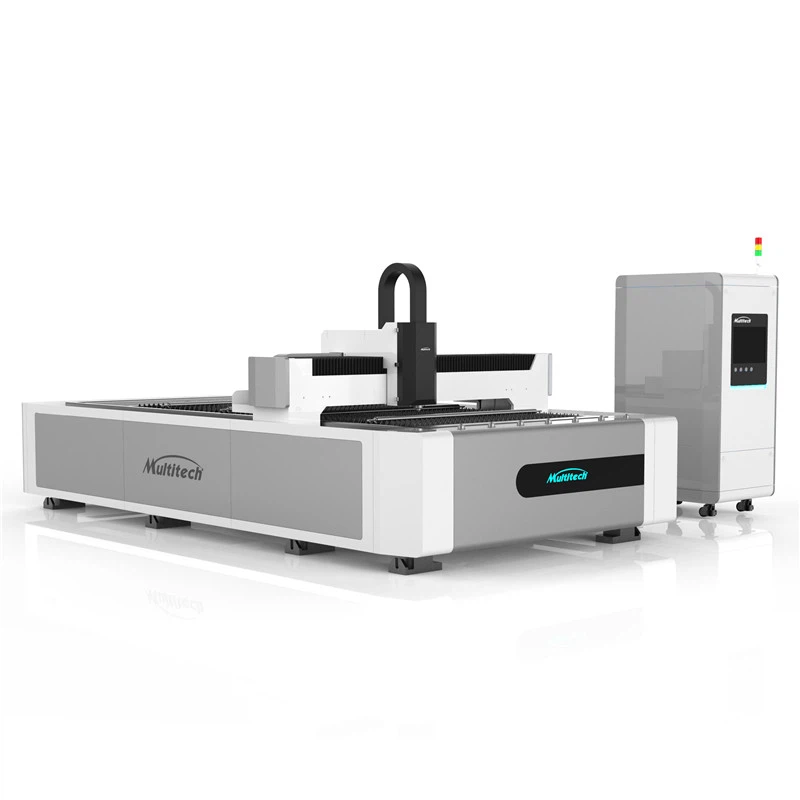
Industrial CNC Laser Cutting Machine
Jinan Itech Machinery Co., Ltd
Itech Group was established in 2003, which is a high-tech corporation with cnc laser machines development, design, production, maintainance and marketing. Engaged in R&D of CAD/CAM technology with the cooperation of Shandong Mechanical Institute, Itech enjoys fast development and has a high level Professionalism and service system. Fiber Laser Cutting Equipment is suitable for metal cutting like Stainless Steel Sheet, Mild Steel Plate, Carbon Steel Sheet, Alloy Steel Plate, Spring steel Sheet, Iron Plate, Galvanized Iron, Galvanized Sheet, Aluminum Plate, Copper Sheet, Brass Sheet, Bronze Plate, Gold Plate, Silver Plate, Titanium Plate, Metal Sheet, Metal Plate, Tubes and Pipes, etc.
Why Choose Us
Our Factory
Itech Group was established in 2003, which is a high-tech corporation with cnc laser machines development,design,production,maintainance and marketing. Engaged in R&D of CAD/CAM technology with the cooperation of Shandong Mechanical Institute,Itech enjoys fast development and has a high level Professionalism and service system.
Production Market
Products are sold to USA, Canada, Australia, Europe, South east Asia, Africa etc, more than 120 countries and areas, and supply OEM service for more than 30 manufactures.
Our Certificate
Itech was awarded "Advanced Woodworking Machinery Manufacture" by China Machinery Association in 2013.
And "Service Star of International Trading Industry" by Shandong international trading agency in 2016.
Our Service
We offer 365 days and 24 hours service, including design,installation,training and maintanance etc.Our response time is 12 hours and solution in 2-4 days for international customers,6 hours and 1-2days for domestic customers.

CNC Laser Cutting Machine Sheet Metal
The CNC Laser Cutting Machine Sheet Metal adopts a high-quality fiber laser. It is controlled by an automatic numerical system.

Metal laser cutting machines have many competitive advantages. First of all, it has high precision, so the processed metal meets uniform standards and the same size.

The steel laser cutter adopts a high-quality fiber laser. It is controlled by an automatic numerical system. This high-tech machine is a combination of laser cutting and automatic CNC machine. This perfect combination ensures its high speed, accuracy, efficiency and low cost.

The laser metal cutter adopts a high-quality fiber laser. The motor is driven synchronously, and the high-strength alloy beam ensures cutting accuracy.

The fiber laser cutting machine uses a fiber laser generator as the light source. The laser beam has high energy density and stable and reliable light source.

CNC Laser Cutting Machine For Stainless Steel
The Cnc Laser Cutting Machine For Stainless Steel adopts a high-quality fiber laser. It is controlled by an automatic numerical system.

3000*1500mm Fiber Laser Cutter
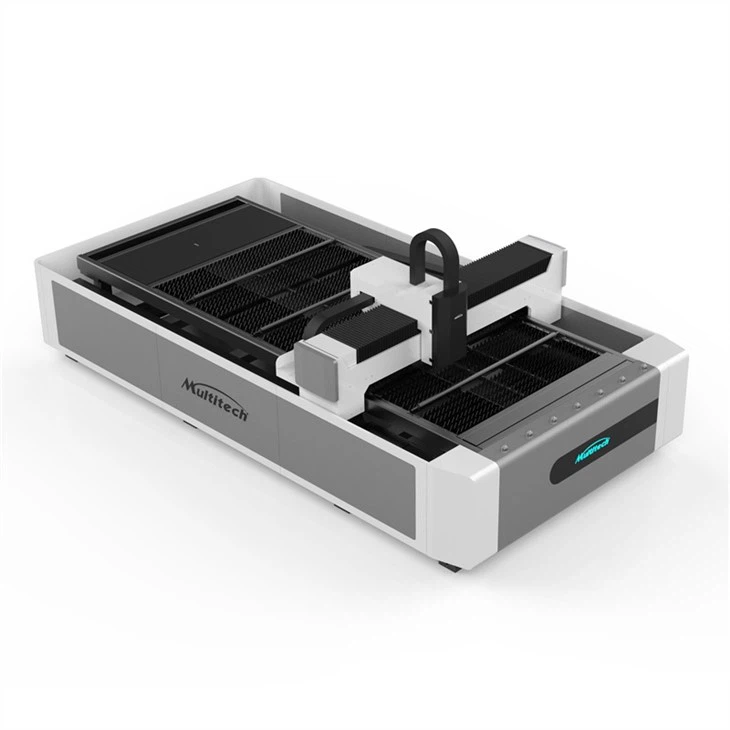
Moving beam, imported high-precision rack and linear guide rail drive smoothly and high precision.The frame, beam and worktable adopt integral welding structure.

CNC Laser Metal Cutting Machine
Laser Cnc Machine For Metal adopts imported rail and heavy racks from Taiwan, Japanese YASKAWA servo motor and driver and American laser mech laser head.
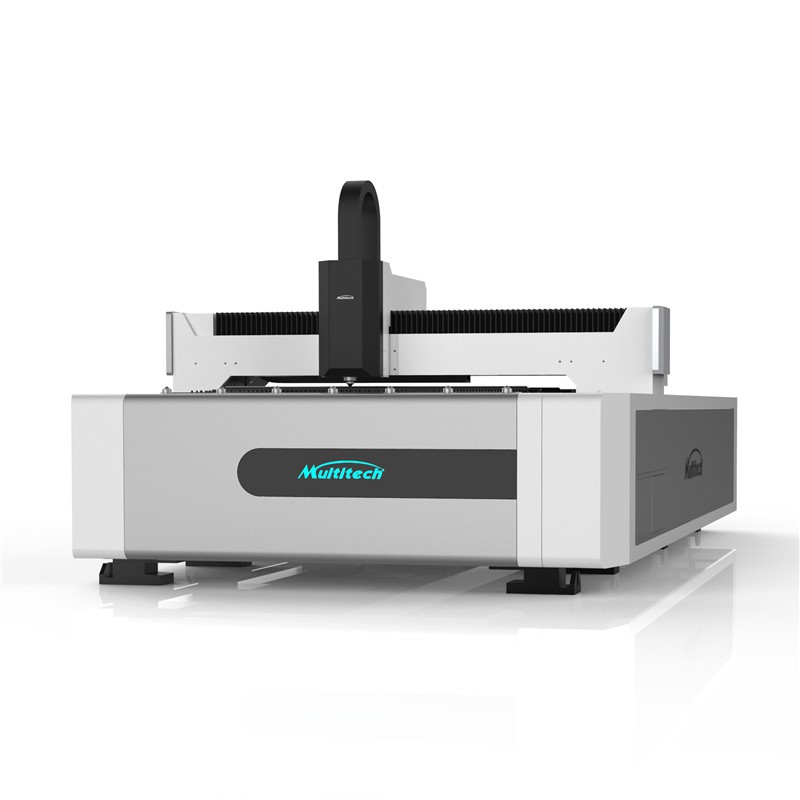
Steel Sheet Laser Cutting Machine
Steel Sheet Laser Cutting Machine adopts guide rail and heavy frame. All these parts are matched with each other, and the stability of the machine is very good.
What is Industrial CNC Laser Cutting Machine
A laser cutter is a machine that uses a high-energy focused laser beam to cut into various plate or sheet materials to create 2-dimensional parts for both hobbyist and industrial applications. Typical materials include wood, steel, and some plastics. A laser cutter by directing a very small-diameter, high-energy light beam vertically down onto a sheet or plate of material to cut it into a 2-dimensional profile by moving the laser in the X and Y directions along the machine bed. This beam melts or burns through the material in a pattern determined by a set of computer-generated instructions called G-code.
Advantages of Industrial CNC Laser Cutting Machine
High Precision and Accuracy
Laser cutting provides unparalleled precision, capable of achieving extremely tight tolerances. The focused laser beam can cut intricate and complex shapes with high accuracy, making it ideal for applications that require detailed and precise cuts. The typical tolerance range for laser cutting is between 0.003 mm to 0.006 mm, which is significantly higher than other cutting methods.
Speed and Efficiency
Laser cutting is much faster than traditional cutting methods, especially when dealing with complex cuts. Its high-speed nature allows for quicker production cycles, reducing overall manufacturing time.
Automation and Repeatability
Modern laser cutting machines are highly automated and controlled by computer numerical control (CNC) systems. This automation ensures consistent results across large production runs, with each piece being an exact replica of the others.
Clean and Contactless Process
Laser cutting is a non-contact process, meaning there is no physical contact between the cutting tool and the material. This eliminates the risk of contamination and reduces the wear and tear on the cutting equipment.
Material Compatibility
Determine the range of materials you will be working with most frequently. The absorption spectrum of the material must coincide with the selected laser type, for the bulk of jobs. This will help to avoid serious complications and slower processing at higher energy levels which will reduce the profitability and operation life of the equipment.
Work Area
Consider the size of the typical job or raw material piece you expect to cut. Choose a machine with a work area large enough to accommodate your expected jobs. Consider also the smaller jobs. These may drive you to choose two machines, to efficiently cover the required range.
Laser Power
Laser power very directly influences the speed and thickness capacity of the equipment. Higher laser power allows for faster cutting through thicker materials, but it affects equipment price which requires amortization over your workload. Selecting an overpowered machine to cope with a minority of your workload affects the profitability of all other jobs.
Precision/Beam Quality
If your expected workload requires high precision and intricate details to be cut, pay close attention to the beam quality of the prospective machines you consider. Fiber lasers generally offer better beam quality compared to CO2 lasers, resulting in finer cuts and smoother engraving.
Speed/Throughput
Consider the production volumes and turnaround times you see yourself requiring. Fiber lasers are faster than CO2 lasers when cutting metals, which can be crucial for industrial-scale operations-but that increases the CAPEX demand.
Automation/Software
Evaluate machine features that enhance productivity and ease of use. Automation options and user-friendly software interfaces can significantly cut setup and operation times. Advanced nesting software can reduce overheads by optimizing material usage, without the high labor cost of job fitting.
Maintenance and Reliability
Assess the implicit maintenance requirements and reliability of the prospective machines. Solid-state lasers (fiber and direct diode) have fewer "user serviceable" parts and more up-time than, for example, CO2 lasers.
Fusion Cutting
Fusion cutting works by using a high-pressure jet of an inert gas like argon or nitrogen to blow out the molten material from the cut created by the laser beam. An inert gas is used so that it does not react with the molten metal. The inert gas also behaves as a shielding gas for the molten edge.
Flame Cutting
Not to be confused with oxy-acetylene cutting, laser flame cutting makes use of oxygen to assist with the cutting process by creating an exothermic oxidation reaction that helps reduce the laser energy requirements. The oxygen is also used to physically blow molten material from the cut. This process is also referred to as reactive laser cutting.
Remote Cutting
Remote cutting also referred to as sublimation or vaporization cutting, is used on very thin or sensitive materials. There is no gas used during cutting and the laser is typically moved using a galvo scanner that directs the laser with a series of mirrors. The laser vaporizes or ablates the material instead of gas blowing it away. Remote cutting can be extremely quick on thin material.
Thermal Stress Fracture
Thermal stress fracture cutting is a technique used to cut material by inducing stress in the base material. An example would be a method employed to cut aluminum nitride where an unfocused beam is used to melt a very thin layer of material on the surface of the part to form aluminum oxide. Aluminum oxide and the base aluminum nitride have different thermal expansion ratios and as the materials cool down at different rates, this causes a stress field that cracks the part along the laser line.
Stealth Dicing™
Stealth Dicing™ is a cutting technique used to place the focal point of the laser inside a material. The laser creates a modified layer internal to the wafer (typically in the production of semiconductors). Once the wafer has been cut, it is expanded using a flexible membrane to cause cracks to propagate through the wafer to separate the individual chips that were internally cut in the material. This technique is mainly used to cut silicon wafers and is preferred to other techniques like diamond wheel cutting which produce inferior chips and require coolant during cutting.
Vector Cutting
Vector cutting is a type of laser cutting used on parts that are made up of clean lines. An example of this would be business advertisement signs. Typically the laser cuts straight through the material.
Laser Rastering
Laser rastering is the most commonly used technique when it comes to engraving an image onto the surface of a material. It works by taking a bitmap image as input and then turning that image into a set of instructions for the laser cutter which then burns the image into the base material.
What Are the Main Components of a Laser Cutting Machine
Machine bed part: The machine bed of the laser cutting machine, the mechanical part that realizes the movement of the X, Y, and Z axes, including the cutting work platform. It is used to place the workpiece to be cut, and can move correctly and accurately according to the control program, usually driven by a servo motor.
Laser generator: A device that generates a laser light source. For laser cutting applications, except for a few occasions where YAG solid-state lasers are used, most of them use CO2 gas lasers or fiber lasers with high electro-optical conversion efficiency and high output power. Because laser cutting requires high beam quality, not all lasers can be used for cutting. Gaussian mode is suitable for less than 1500W, low-order mode carbon dioxide laser 100W-3000W, and multi-mode above 3000W.
External optical path: Refraction mirror, used to guide the laser in the required direction. In order to prevent failure of the beam path, all mirrors should be protected by protective covers, and clean positive pressure protective gas should be introduced to protect the mirrors from contamination. A well-performing set of lenses will focus a beam with no divergence angle into an infinitely small spot. A 5.0-inch focal length lens is generally used. 7.5" lenses are only available for materials with thickness more than 12mm.
Numerical control system: Control the machine bed to realize the movement of X, Y and Z axes, and also control the output power of the laser.
Regulated power supply: Connected between lasers, CNC machine tools and power supply systems. It mainly plays the role of preventing external grid interference.
Cutting head: It mainly includes parts such as cavity, focusing lens holder, focusing mirror, capacitive sensor and auxiliary gas nozzle. The cutting head driving device is used to drive the cutting head to move along the Z-axis according to the program, and is composed of a servo motor and transmission parts such as a screw rod or a gear.
Operating table: Used to control the working process of the entire cutting device.
Chiller: Used to cool the laser generator. Laser is a device that converts electrical energy into light energy. For example, the conversion rate of CO2 gas laser is generally 20%, and the remaining energy is converted into heat. The cooling water takes away the excess heat to keep the laser generator working properly. The chiller also cools the external optical path reflector and focusing mirror of the machine tool to ensure stable beam transmission quality and effectively prevent the lens from being deformed or burst due to excessive temperature.
Gas cylinder: Including the working medium gas cylinder and auxiliary gas cylinder of the laser cutting machine, which are used to supplement the industrial gas for laser oscillation and the auxiliary gas for supplying the cutting head.
Air compressor, air storage tank: Provide and store compressed air.
Air cooling dryer and filter: Used to supply clean dry air to the laser generator and beam path to keep the path and reflector working normally.
Exhaust dust collector: Extract the smoke and dust generated during processing, and filter it, so that the exhaust gas discharge meets the environmental protection standards.
Slag discharger: Remove the leftover material and waste generated during processing.
How to Install a Laser Cutting Machine
Fixed machine
Ensure that the machine has a relatively stable state during operation. After our equipment arrives, place the machine in a relatively stable place and first fix the four wheels and foot cups of the machine.
Connect the cooling system
First, connect the outlet of the chiller to the water inlet and match them one by one. Then connect the water protection signal line and power line, and turn on the water protection switch.
Connect the air pump
Many people don't understand why an air pump needs to be connected. In fact, when a laser cutting machine is actually working, a large amount of powder will be generated on the material, affecting the carving or cutting effect. Therefore, we need to use an air pump or a larger air compressor to blow off the surface powder of the material.
Connect the exhaust fan
The above also mentioned that the machine generates a large amount of powder and smoke during operation. The air pump blows away the layer of powder on the surface of the material, and the function of the exhaust fan is to suck away the powder and smoke, ensuring the cleanliness of the machine and materials.
Connect the power cord
After the above steps have been completed, it is now time for us to connect the power cord. Plug the standard power cord into the marked area , and then plug the other end into the power strip.
Unlock emergency switch
The emergency switches of unused machines are locked, so please unlock the advanced switch before starting the machine. Here, you only need to lightly rotate it.
Start the machine
At this point, we can proceed to the steps of starting the machine. For safety reasons, we need to turn on the main power first, and then turn on the laser power.
Connect the machine and computer using a USB cable
In this way, the machine will be connected to the computer, and you can use the computer to transfer files when you need to process.
Shut down the machine
Finally, after using the machine, in order to maintain it or save electricity. We need to turn off the machine and form a good habit. Just the opposite of turning on the machine, first turn off the laser power, and then turn off the main power.
How to Measure the Quality of Laser Cutting Machine

Roughness
The cross section of the laser cutting machine will form vertical lines, and the depth of the lines determines the roughness of the cutting surface. The lighter the line, the smoother the cut. Roughness affects not only the appearance of the finished product, but also the degree of friction. In most cases, it is necessary to reduce the texture depth of the cut section. The smoother the surface, the better the effect.
Verticality
If the thickness of the cut sheet exceeds 10 mm, the perpendicularity of the cutting edge becomes important. During the cutting process, the laser head moves from far to near and from top to bottom. The beam at the focal point becomes scattered at greater distances. deviation, the smaller the vertical deviation, the better the machine performance

Cutting lines and burrs
The advantages of laser cutting machine compared with other processing equipment are small cutting burr, fast efficiency and high precision. When the laser cutting machine processes the thick plate, the metal slag does not appear on the vertical cutting surface, but appears obliquely below, causing the gas to blow the slag away when blowing the slag, and form it after cooling. Remove scum and burrs.
Laser Cutting Machine Maintenance Tasks
Checking and Cleaning Mirrors
Mirrors play a critical role in directing the laser beam accurately. Over time, they can accumulate dust and debris, affecting the beam's quality and precision. Regularly check the mirrors for cleanliness and clean them if necessary using an appropriate cleaning solution and a lint-free cloth.
Cleaning the Lens
The lens is another crucial component that requires regular cleaning. Dust and debris can accumulate on the lens, leading to poor cutting and engraving results. Carefully remove the lens and clean it using a lens cleaning solution and a lint-free cloth. Be gentle to avoid scratching the lens.
Inspecting and Replacing Filters
Many laser cutting machines have filters to remove fumes, smoke, and other contaminants from the air. Regularly inspect these filters and replace them when necessary to maintain proper air quality and prevent buildup.
Checking and Calibrating Alignment
Proper alignment is essential for accurate cutting. Regularly check and calibrate the alignment of your laser cutting machine to ensure precise and consistent cuts. Follow the manufacturer's instructions for alignment procedures.
Updating Software and Firmware
Regularly check for software updates specifically designed for the machine you are using. These updates are crucial for maintaining optimal performance and compatibility.
Scheduling Professional Maintenance
While regular maintenance tasks can be performed by the machine owner/operator, it is also advisable to schedule professional maintenance by qualified technicians. They have the expertise and knowledge to identify potential issues and perform more advanced maintenance tasks. Regular professional maintenance can help identify and address problems before they cause major breakdowns.
FAQ
Hot Tags: industrial cnc laser cutting machine, China industrial cnc laser cutting machine manufacturers, suppliers, factory, Fiber Laser Sheet Metal Cutting Machine, Fiber Laser Cutting Machine, Laser Metal Cutter, 3000*1500mm Metal Laser Cutter, Fiber Laser Metal Cutter Machine, Full Automatic Fiber Laser Cutter
Send Inquiry
