
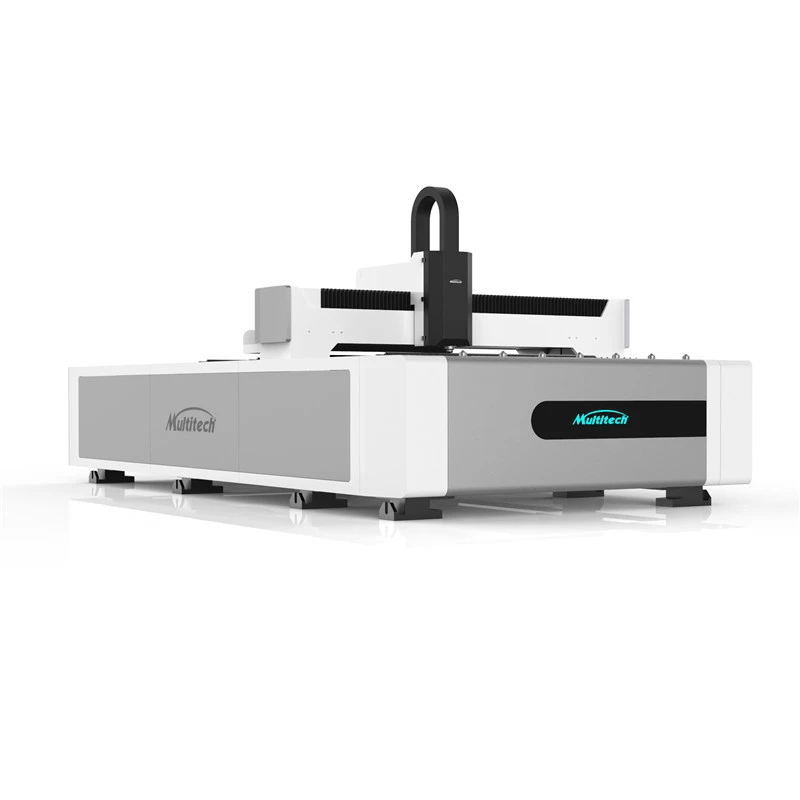
Industrial Fiber Laser Cutting Machine
Jinan Itech Machinery Co., Ltd
Itech Group was established in 2003, which is a high-tech corporation with cnc laser machines development, design, production, maintainance and marketing. Engaged in R&D of CAD/CAM technology with the cooperation of Shandong Mechanical Institute, Itech enjoys fast development and has a high level Professionalism and service system. Fiber Laser Cutting Equipment is suitable for metal cutting like Stainless Steel Sheet, Mild Steel Plate, Carbon Steel Sheet, Alloy Steel Plate, Spring steel Sheet, Iron Plate, Galvanized Iron, Galvanized Sheet, Aluminum Plate, Copper Sheet, Brass Sheet, Bronze Plate, Gold Plate, Silver Plate, Titanium Plate, Metal Sheet, Metal Plate, Tubes and Pipes, etc.
Why Choose Us
Our Factory
Itech Group was established in 2003, which is a high-tech corporation with cnc laser machines development,design,production,maintainance and marketing. Engaged in R&D of CAD/CAM technology with the cooperation of Shandong Mechanical Institute,Itech enjoys fast development and has a high level Professionalism and service system.
Production Market
Products are sold to USA, Canada, Australia, Europe, South east Asia, Africa etc, more than 120 countries and areas, and supply OEM service for more than 30 manufactures.
Our Certificate
Itech was awarded "Advanced Woodworking Machinery Manufacture" by China Machinery Association in 2013.
And "Service Star of International Trading Industry" by Shandong international trading agency in 2016.
Our Service
We offer 365 days and 24 hours service, including design,installation,training and maintanance etc.Our response time is 12 hours and solution in 2-4 days for international customers,6 hours and 1-2days for domestic customers.

CNC Laser Cutting Machine Sheet Metal
The CNC Laser Cutting Machine Sheet Metal adopts a high-quality fiber laser. It is controlled by an automatic numerical system.

Metal laser cutting machines have many competitive advantages. First of all, it has high precision, so the processed metal meets uniform standards and the same size.

The steel laser cutter adopts a high-quality fiber laser. It is controlled by an automatic numerical system. This high-tech machine is a combination of laser cutting and automatic CNC machine. This perfect combination ensures its high speed, accuracy, efficiency and low cost.

The laser metal cutter adopts a high-quality fiber laser. The motor is driven synchronously, and the high-strength alloy beam ensures cutting accuracy.

The fiber laser cutting machine uses a fiber laser generator as the light source. The laser beam has high energy density and stable and reliable light source.

CNC Laser Cutting Machine For Stainless Steel
The Cnc Laser Cutting Machine For Stainless Steel adopts a high-quality fiber laser. It is controlled by an automatic numerical system.

3000*1500mm Fiber Laser Cutter
Moving beam, imported high-precision rack and linear guide rail drive smoothly and high precision.The frame, beam and worktable adopt integral welding structure.

CNC Laser Metal Cutting Machine
Laser Cnc Machine For Metal adopts imported rail and heavy racks from Taiwan, Japanese YASKAWA servo motor and driver and American laser mech laser head.
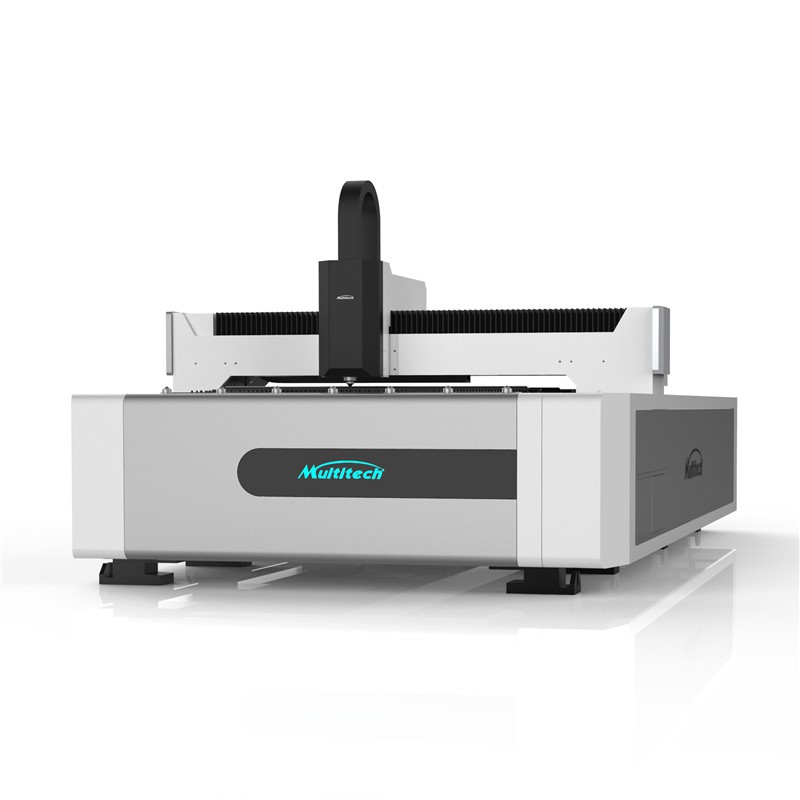
Steel Sheet Laser Cutting Machine
Steel Sheet Laser Cutting Machine adopts guide rail and heavy frame. All these parts are matched with each other, and the stability of the machine is very good.
What is Industrial Fiber Laser Cutting Machine
Fiber laser cutting is a type of laser cutting that uses a high-power laser beam focused through a Fiber optic cable. The Fiber optic cable is made up of flexible glass Fibers that guide the laser beam to the cutting head. Fiber cutting machines are highly efficient, and the laser beam can be focused on very small spot sizes, enabling it to cut intricate shapes with high precision. Fiber laser cutting machines are a highly efficient and versatile cutting technology that can be used in a variety of industries. They offer high precision, high speed, low operating costs, and can cut a wide range of materials.
Advantages of Industrial Fiber Laser Cutting Machine
Impeccable Edge Quality
The advent of fiber laser cutting has brought forth a paradigm shift in edge quality. The technology's inherent precision engenders edges that are exceptionally clean and well-defined. This is a direct consequence of the minimal kerf width and the reduced heat affected zone (HAZ), which together ensure that the material is cut with utmost accuracy, obviating the need for additional finishing processes. The result is a product that boasts of a superior finish, right off the cutting table.
Unmatched Precision – Computer Numerical Control (CNC)
Fiber laser cutting machines are typically governed by sophisticated CNC systems, allowing for intricate patterns and complex designs to be executed with surgical precision. This level of control is indispensable for applications that demand exacting standards, such as aerospace components and medical devices. The repeatability afforded by CNC technology ensures that each piece is a carbon copy of the last, maintaining consistency across production runs.
Durability of Tools
The non-contact nature of fiber laser cutting means that there is no physical wear and tear on cutting tools. This stands in stark contrast to traditional mechanical cutting methods, where the tools degrade over time, affecting cut quality and necessitating frequent replacements. The longevity of laser cutting tools translates to lower maintenance costs and less downtime, enhancing overall productivity.
Minimized Material Deformation
Fiber laser cutting machine minimizes the heat input to the material, significantly reducing the likelihood of warping or distortion. This is particularly beneficial when working with metals that are susceptible to heat-induced changes. Maintaining the integrity of the material is crucial in industries where precision is not just desired but required.
Fiber Laser Source
Fiber lasers use a fiber doped fiber optic cable as the laser source. There are many different types of rare earth materials available for doping. This leads to multiple options for fiber laser source. Ytterbium-doped fiber lasers are among the most common types of laser source among fiber lasers. Different doping materials produce laser of different wavelength.
Cutting Head
The cutting head is the part that outputs the laser from the system and focuses it on the workpiece. It c a focus consists of a lens, a nozzle, and a focus tracking system. This is a movable part of the fiber laser cutting machine. The movement is according to the direction of the cut. The height of the cutting head from the workpiece is also adjustable.
Servo Motor
Servo motor is the part responsible for the movement of the optics and mechanical parts of the laser cutting machine. Modern laser cutting machines have precise servo motors capable of minute movements of the optical components. The speed of the servo motor is also highly controlled. The precision of the laser cutting is largely dependent on the movement of the servo motor.
Cooling System
Laser machine parts generate a high amount of heat. Therefore, it requires a cooling system to ensure the internal components are not damaged. This job is done by the water chillers. Water chillers can drop the temperature of the entire fiber laser cutter very quickly.
Worktable
The worktable is the area for mounting the workpiece. The worktable, bed, and beam are collectively called the host. The host contains various servomotors for the relative movement in the z-axis.
CNC Controller
One of the benefits of a fiber laser cutting machine is its ability to be automated through a CNC control system. The CNC controller interprets the program instructions and passes it along to the various parts of the machine. The CNC controller moves the cutting head in the X, Y, and Z axis accordingly.
Assist Gas System
The assist gas system is used to blow away the molten material from the workpiece. The laser beam is only capable of melting the workpiece material. Without the assist gas system, the molten material will cool-off and welding will take place. The assist gas system puts pressure on the molten material and pushes it away. The gas used may be oxygen, nitrogen, or air.
Control Panel
Control panel is the interface where the operator can interact with the machine and adjust various settings. The control panel also has features like the emergency stop button. There is generally a display to preview the settings and learn about any error codes and messages.
CO2 laser cutters and fiber laser cutters primarily differ in the mechanisms they use to generate and concentrate the laser. They also operate at different wavelengths and are suitable for different materials. This creates practical differences in efficiency and suitability for specific tasks.
Mechanisms & Mediums
CO2 and fiber laser cutters use different mechanisms to cut materials. CO2 lasers use gases such as carbon dioxide, nitrogen and helium, and sometimes xenon or hydrogen. The machine mixes and excites these gases to produce a laser.
Fiber lasers use elements such as erbium, ytterbium, neodymium or dysprosium. Mixing these elements together results in a crystalline solid as a fiber, and this is guided into the machine's cutting head through a transport fiber.
Wavelength
Fiber laser cutters and CO2 laser cutters also work using different wavelengths. The laser produced by a fiber laser machine has a shorter wavelength than CO2 machines. This gives the fiber laser greater absorption power, which increases overall cutting speed and cutting quality.
Material & Thickness Suitability
Another major difference between the two laser cutters is the material they work with. Fiber laser cutting is perfectly suited to sheet metal cutting which is vital to a lot of businesses. CO2 laser machines work more effectively for thick plate cutting.
Efficiency & Output
Since the fiber laser machine can produce a cutting laser faster and more efficiently and cut through thicker materials, it has financial benefits for high-volume producers. CO2 lasers also need around ten minutes of warm-up time before they can operate well, which reduces efficiency and output.
What Are The Applications Of Fiber Laser Cutting Machinesfor product use
The Automotive Industry – A fiber laser cutting machine processes many parts of a car, including doors, brakes and exhaust pipes.
The Kitchenware Industry – Many of the appliances found in kitchens are made of thin pieces of stainless steel which have been processed by a fiber laser cutter.
Home Appliance Manufacturing – Fiber laser cutters are being incorporated more in this industry to improve the quality of appliances and optimise their appearance.
Fitness Machine Manufacturing – Even the equipment at your local gym has been processed in part by a fiber laser cutter.
Lighting Manufacturing – Most mainstream outdoor lamps have pipes which have been shaped with the help of this machinery.
Decor & Metal Art Manufacturing – Fiber laser cutters can be used with computer numerical control to create graphic designs and patterns in sheets of metal. This means custom pieces for decoration and metal signs can be crafted.
Focus Lenses for Your Fiber Laser Cutting Machine Come Sizes
Focus lenses for your fiber laser cutting machine come in different sizes to perform different jobs. An inch measurement identifies each lens. This measurement doesn't refer to the size of the lens. Rather, it refers to the focus distance from the material you're cutting. Each lens creates a different spot size on the material you're cutting. Some of the most common sizes and their uses include:
1.5-inch focal length lens
This lens has a short focal length and is best for engraving fine details and thin lines. This lens isn't a good option for thick cutting lines. Its spot size is 0.003 inches.
2-inch focal length lens
A 2-inch focal length lens is also good for fine engraving and thin lines and detail work. Like the smaller 1.5-inch lens, it's not good for cutting thick lines, but it's a good general-purpose lens. Its spot size is 0.004 inches.
2.5-inch focal length lens
This lens is good for cutting up to 1/2 inch of material and engraving thicker lines. Its spot size is 0.005 inches.
5-inch focal length lens
A long-focus lens such as this one is good for cutting into deep areas where you need room to work. It has a large spot size of 0.01 inches, so it's perfect for making big bulky cuts for large items but not exactly ideal for high-precision and detailed metal cutting.
Metal Types for Fiber Laser Cutting Machine
Structural steel
The material will get better results when cut with oxygen.
When oxygen is used as an auxiliary gas, the cutting edge is slightly oxidized. For plates up to 4 mm thick, nitrogen can be used as a gas for cutting. In this case, the cutting edge is not oxidized. On plates with a thickness of more than 10 mm, oil can be applied to the surface of the workpiece to obtain a better cut quality.
Stainless steel
Oxygen can be used when oxidation of the cutting edge is acceptable. Use nitrogen to get a non-oxidized edge without burrs.
Aluminum
Despite its high reflectivity and thermal conductivity, aluminum can be cut to a thickness of 6 mm, depending on the alloy type and laser power.
When cutting with oxygen, the cutting surface is rough and hard. The cut surface is smooth when using nitrogen.
Pure aluminum is very difficult to cut because of its high purity. The laser system must be equipped with a "reflective absorption" device for cutting aluminum, otherwise the optical components will be damaged by reflection.
Copper and brass
Both materials have a high reflectivity and a very good thermal conductivity.
Brass with a thickness of 1 mm can be cut with nitrogen. Copper with a thickness of less than 2mm can be cut with oxygen.
Copper and brass are cut only if the laser system is equipped with a "reflective absorption" device, otherwise the optical components will be damaged by reflection.
Titanium
Titanium plates are cut with argon and nitrogen as process gases.
Fiber Laser Cutting Machine Operation Guide
Fiber laser cutting machine boot sequence:
Check if is there any items that affect the safe operation of the machine around the machine's operating range.
Switch on the fiber laser cutting machine main power and the each branch control power.
Check out the regulator is running normally after turn on the regulator.
Switch on the fiber laser power and keep its own air conditioner or internal desuperheater of the fiber laser cutter work for more than 30 minutes.
Turn on the air compressor after the fiber laser is turned on for 20 minutes, and check whether the air compressor is running normally.
Open the air control valve and the dryer, checking whether the operation status of the dryer is normal, and whether the air pressure is normal.
Open the cutting assist gas control valve according to the cutting needs, check whether the cutting auxiliary gas pressure is normal.
Turn on the machine power, and press the power button to start the machine control system, and keep the machine returns to the original position after the control system starts normally.
Turn on the chiller after the fiber laser is turned on and worked about more than 30 minutes, and check whether the chiller is in normal operation.
Make the fiber laser in state of high voltage until the actual temperature of the high and low temperature water of the chiller reaches the set temperature ±1 °C range, and check whether the operation state of the fiber laser is normal.
Open the exhaust fan or dust collector, check whether the operating state of the exhaust fan or the dust collector is normal, and let the fiber laser cutting machine enter the state to be cut.
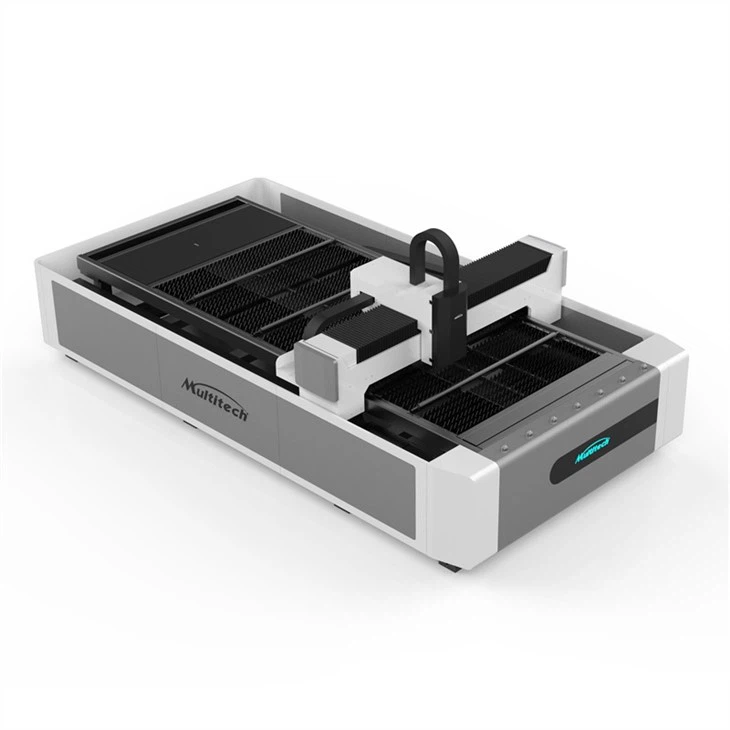
Shut down fan or dust collector
Turn off the high voltage of the fiber laser, return the machine to the original point, then close the control system as required. After the control system is closed, press the power off button to turn off the control system power and turn off the machine's main power.
Turn off the cold water chiller.
Shut down the dryer, and each pneumatic control valve.
Turn off the air compressor.
Shutdown regulator.
Turn off the power switch of each branch, and the main power switch of the fiber laser machine
During the startup process, and there is no cutting task or rest time of more than 1 hour. It is recommended that the customer turn off the high voltage of the fiber laser, not turn off the fiber laser power switch, and turn off the chiller. When the product needs to be cut again, the chiller is operated, and the actual temperature of the chiller high and low temperature water reaches the set temperature ±1 °C range, then the high voltage on the fiber laser, and then start to emit the light to cut.

FAQ
Hot Tags: industrial fiber laser cutting machine, China industrial fiber laser cutting machine manufacturers, suppliers, factory, CNC Laser Cutting Machine Sheet Metal, Fiber Laser Cutting Machine, 12000W Fiber Laser Cutting Machine, 3000*1500mm Metal Laser Cutter, 12kw fiber laser cutting machine, Full Automatic Fiber Laser Cutter
Send Inquiry
