

Industrial Laser Cutting Machine
Jinan Itech Machinery Co., Ltd
Itech Group was established in 2003, which is a high-tech corporation with cnc laser machines development, design, production, maintainance and marketing. Engaged in R&D of CAD/CAM technology with the cooperation of Shandong Mechanical Institute, Itech enjoys fast development and has a high level Professionalism and service system. Fiber Laser Cutting Equipment is suitable for metal cutting like Stainless Steel Sheet, Mild Steel Plate, Carbon Steel Sheet, Alloy Steel Plate, Spring steel Sheet, Iron Plate, Galvanized Iron, Galvanized Sheet, Aluminum Plate, Copper Sheet, Brass Sheet, Bronze Plate, Gold Plate, Silver Plate, Titanium Plate, Metal Sheet, Metal Plate, Tubes and Pipes, etc.
Why Choose Us
Our Factory
Itech Group was established in 2003, which is a high-tech corporation with cnc laser machines development,design,production,maintainance and marketing. Engaged in R&D of CAD/CAM technology with the cooperation of Shandong Mechanical Institute,Itech enjoys fast development and has a high level Professionalism and service system.
Production Market
Products are sold to USA, Canada, Australia, Europe, South east Asia, Africa etc, more than 120 countries and areas, and supply OEM service for more than 30 manufactures.
Our Certificate
Itech was awarded "Advanced Woodworking Machinery Manufacture" by China Machinery Association in 2013.
And "Service Star of International Trading Industry" by Shandong international trading agency in 2016.
Our Service
We offer 365 days and 24 hours service, including design,installation,training and maintanance etc.Our response time is 12 hours and solution in 2-4 days for international customers,6 hours and 1-2days for domestic customers.

CNC Laser Cutting Machine Sheet Metal
The CNC Laser Cutting Machine Sheet Metal adopts a high-quality fiber laser. It is controlled by an automatic numerical system.

Metal laser cutting machines have many competitive advantages. First of all, it has high precision, so the processed metal meets uniform standards and the same size.

The steel laser cutter adopts a high-quality fiber laser. It is controlled by an automatic numerical system. This high-tech machine is a combination of laser cutting and automatic CNC machine. This perfect combination ensures its high speed, accuracy, efficiency and low cost.

The laser metal cutter adopts a high-quality fiber laser. The motor is driven synchronously, and the high-strength alloy beam ensures cutting accuracy.

The fiber laser cutting machine uses a fiber laser generator as the light source. The laser beam has high energy density and stable and reliable light source.

CNC Laser Cutting Machine For Stainless Steel
The Cnc Laser Cutting Machine For Stainless Steel adopts a high-quality fiber laser. It is controlled by an automatic numerical system.

3000*1500mm Fiber Laser Cutter
Moving beam, imported high-precision rack and linear guide rail drive smoothly and high precision.The frame, beam and worktable adopt integral welding structure.

CNC Laser Metal Cutting Machine
Laser Cnc Machine For Metal adopts imported rail and heavy racks from Taiwan, Japanese YASKAWA servo motor and driver and American laser mech laser head.
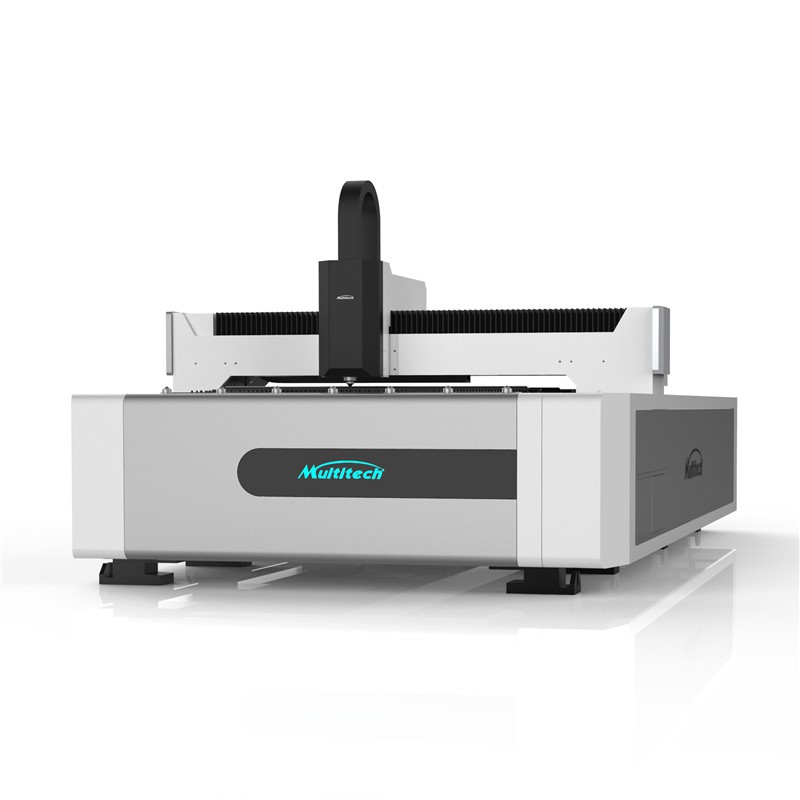
Steel Sheet Laser Cutting Machine
Steel Sheet Laser Cutting Machine adopts guide rail and heavy frame. All these parts are matched with each other, and the stability of the machine is very good.
What is Industrial Laser Cutting Machine
A laser cutting machine is often used in engineering for the precision cutting of components of machines. For industrial applications, a laser cutting machine is often used to cut structural and piping materials and flat sheet material such as metal. The CNC setting can also be changed to etch or engrave all types of designs on metal, wood and plastic. Speciality CAD (computer aided design) software is used to program the CNC and direct it to perform either the cutting, engraving or etching specifications required for the laser cutting project. The size and capacity of the laser cutting machine determines whether it can be used for smaller or larger-scale manufacturing projects.
Advantages of Industrial Laser Cutting Machine
Flexibility
Laser cutting does not require an exchange of tools for each separate cut. The same setup is suitable for cutting a lot of different shapes within the same material thickness. Also, intricate cuts do not pose any problems.
Precision
Accuracy is one of the primary advantages of Laser Cutting Machine when compared to other thermal cutting methods.An accuracy of +/-0.1 mm gives an opportunity to achieve high precision without any after-treatment. In most cases, such a high standard means that no added tolerances are required.
Automation
The job needs little manpower as contemporary laser cutting machinery is highly automated. An experienced machine operator still plays a big role in the final quality but the speed of cutting and little need for manual labour result in lower costs compared to other cutting methods.
Quality
Using the right setup, laser cutters only leave a small burr. Often, it is not necessary to even remove it. Of course, it depends on the material, its thickness and other factors.Another perk is having a small heat affected zone.
A laser cutter works by directing a very small-diameter, high-energy light beam vertically down onto a sheet or plate of material to cut it into a 2-dimensional profile by moving the laser in the X and Y directions along the machine bed. This beam melts or burns through the material in a pattern determined by a set of computer-generated instructions called G-code. A high-pressure stream of gas is sometimes used to blow the molten material out of the bottom of the material being cut. This process is done so that the waste material does not remain in the cut area and solidifies after the beam has moved on. In other cases, the laser beam simply vaporizes the material. The method of generating the laser beam differs between technologies, but in principle, they all follow the steps listed below:
Step 1: Generation of G-code File
Before any cutting is performed, the G-code needs to be generated for the cutting job. G-code is a set of machine-readable instructions that tell the machine where to move the laser cutting head. The operator can generate the instructions by hand for simple shapes. More-complex shapes require CAM (computer-aided manufacturing) software to automatically generate this G-code from a supplied CAD (computer-aided design) file. This G-code must then be sent to the machine over a Wi-Fi connection or using a USB drive.
Step 2: Laser Beam Generation
The laser beam is generated inside the resonator. Different laser technologies use different mediums to generate the laser. However, the physics of beam generation is the same for the different laser technologies.
When an electron is stimulated by a photon it absorbs its energy to move to a higher energy state. An exact amount of energy from a photon is required to energize an electron to a specific energy state. This process is known as stimulated absorption.
The electron will decay to a lower orbital after a very short period of time. This decay is caused by small fluctuations in the quantum vacuum that cause it to fall back into a lower energy state. On decay, it will emit a photon. This process is known as spontaneous emission.
Spontaneous emission of a photon cannot be used to create a laser beam as the emitted photons will be incoherent as they move off in random directions. They will also drop down to the ground state too quickly. Lasers get around this issue by making use of materials with a metastable state. This process allows the electron to remain in a semi-excited state for longer when compared to the timescale involved with spontaneous emission (i.e. milliseconds vs. nanoseconds).
When a photon interacts with an already excited electron in its metastable state, it can cause the electron to fall back down into a lower energy orbital. When the electron does this, a photon is released with the same properties as the photon that initially perturbed it (i.e. same frequency, phase, and polarization). This process is called stimulated emission and is the mechanism used to create a laser beam. Once the process starts, it causes a cascade of photons to be released that then travel down the tube.
Step 3: Laser Amplification
When the initial phase of spontaneous emission occurs, the photons will shoot off in random directions. However, some will be perpendicular to the two mirrors on either end of the laser medium. This situation creates two light waves (one traveling left and one traveling right in the medium) which creates a standing wave consisting of constructive and destructive interference. When these standing waves are produced, this is referred to as resonance. The intensity of the light increases to the point where the semi-reflective mirror will allow some light through it, generating a coherent beam of laser energy. The remaining light continues to reflect in the laser medium to continue the stimulated emission of photons. Different laser technologies produce lasers with different wavelengths.
Step 4: Beam Direction and Focusing
As the beam exits the laser medium after amplification, it is directed either through a fiber optic cable (in the case of a fiber laser) or via a series of mirrors (for CO2 and Nd:YAG lasers). The beam is directed down into the sheet material through a lens that focuses the laser energy into a very small diameter to create a localized high-energy point. Note that the laser only has a single focus point of high intensity; the entire beam does not have the same cutting intensity. The difference in intensity is the reason why laser cutters are limited in the thickness of material they can cut, as the laser intensity drops off above and below the focus point.
Step 5: Material Cutting
Once the beam has been focused, it will begin to melt or vaporize the material. In the case of non-melting materials, like wood, the laser will burn through the material. With metals, the laser beam will melt the material, and a high-pressure jet of gas will blow the molten material away from the cut. The gas can either be inert nitrogen or argon or it can be oxygen which is used to accelerate the cutting process of steel.
Applications Industrial Laser Cutting Machine Across Industries
Automotive
Precision parts
Laser cutting machines, mainly used for precision parts manufacturing in automotive industry, can ensure cutting efficiency and surface quality of precise components. For example, vehicle brake pads and other core components require high-precision cutting so as to make sure their performance and security.
Interior parts
Interior parts processing can be also achieved by laser cutters. Interior parts normally entail intricate and high-quality surface processes, which can be met by laser cutters through their flexibility and accuracy. In addition, laser-cutting machines can provide customized design services to meet the demands of various customers.
Aerospace
Airframe components
In aerospace, laser cutting machines can be used to manufacture airframe components, which have high requirements on product weight and strength. Laser cutters can ensure material performance is not affected through their high-quality cutting and small heat-affected zones.
Engine parts
Engine parts can be produced by laser cutting machines. These components commonly require high precision and complex geometric patterns. The requirements of which can be met by laser cutting machines with high precision and speed.
In addition, some materials, such as titanium alloy and nickel-based alloys, that are hard-processed by machines can be handled by laser cutters.
Electronics
Circuit boards
Laser cutting machines are mainly used for circuit board cutting. Circuit boards as the main components of electronics, their manufacturing precision and quality directly decide the lifespan and performance of electronics, and thus laser cutters allow for high-efficiency manufacturing for circuit boards.
Enclosures and heatsinks
Although heatsinks require intricate patterns and high-quality surface processes, laser cutters can meet the demands depending on their high precision and flexibility. In addition, laser cutting machines can handle the complicated structures of radiators, enhancing their heat dissipation performance.
Medical
Implants
Laser cutting machines are mainly used for all kinds of implants in the medical industry, such as joint replacement and dental implants. Besides, they can also cut complex patterns and shapes from biocompatible materials to ensure the precise fitting of implants and their fine integration with patients.
Surgical Instruments
Laser cutting machines can be used to produce surgical instruments. Laser cutting machine's quality of high-quality and speed can meet the requirements of surgical instruments and ensure their performance and reliability. In addition, customized designs can meet the requirements of various surgeries.
What Are the Things To Consider when Choosing the Laser Cutting Machine
Material type and thickness: Laser cutting machine relies heavily on the material's properties. Certain types of laser cutting machine, like fiber laser cutting machine, are more efficient at cutting metals like stainless steel or aluminum, while co2 lasers excel at cutting non-metals like wood, acrylic, and paper.
Understanding the material thickness is equally vital. For instance, thick materials might require lasers with a higher power range.
Desired precision and edge quality: The type of laser cutting machine you choose can affect the precision of your cuts. Solid state lasers, like neodymium-doped yttrium aluminum garnet (nd:Yag) and neodymium-doped yttrium ortho vanadate (nd:Yvo4), are known for their precision and quality finishes.
Production speed requirements: Fiber laser cutting machine with their high-speed capabilities, are particularly well-suited for applications demanding rapid sheet metal fabrication. Comparatively, co2 lasers might not be as fast but offer versatility.
Initial investment budget: The upfront cost can be a decisive factor. For instance, diode lasers are typically less expensive than their co2 or fiber laser counterparts.
Operating and maintenance costs: Maintenance requirements can vary across laser cutting machine types. While fiber lasers are virtually maintenance-free, co2 laser cutters May require regular upkeep due to their complex gas mixture and mirror control mechanisms.
Intended application: Laser laser cutting machine is not just about slicing materials. Depending on your need – be it engraving, drilling, or slicing – certain lasers might be more suitable. For example, co2 lasers provide an excellent engraving process on materials like wood and glass.
Power consumption and energy efficiency: Co2 laser cutting machine, despite their capabilities, have higher energy consumption compared to fiber lasers. An understanding of power consumption can significantly impact operating costs, especially for large-scale operations.
Work environment and available space: The space requirement can vary based on the laser cutting machine type. While the co2 resonator takes up more space, fiber laser modules are compact, often the size of a briefcase.
Precautions While Using Laser Cutting Machines
First and foremost, it is crucial to become familiar with your machine. Before beginning any laser project, read your laser cutting machine's manual carefully.
Although the internet has a great deal of information, you must never utilize it for replacing the user guide. The manual that comes with the machine would be the most thorough installation, safety, and work instructions guide.
Maintaining a log helps ensure that the user has all essential information regarding the laser cutting machine. The record must include information about who was using the device, how they used it, what materials they processed with it, any significant findings or issues, and the length of time they utilized it.
Thus, it'll serve as a basis for how other people have utilized the tool and will provide you with some insight into the machine's condition. Moreover, the log will also stop you from repeating the same mistakes.
Exposure to a beam of laser might cause catastrophic harm to the eyes. These lasers can pass right past someone's pupils and then into the eyes. The degree of damage resulting from this incident depends on the laser beam's focus, the region it strikes, the quantity of energy consumed, and other parameters.
Using decent-quality protective goggles is the best method to avoid the issue. Additionally, maintaining appropriate tool handling and staying at a safe distance is another approach to minimizing potential injury.
You must remove any dirt that becomes stuck in the cutter. Dust may cause big fires, harm the equipment, or the substance getting processed if you don't remove them. So, clean your laser cutting machine's internal cavity and cutting deck with a vacuum after each usage.
When you use a laser cutting machine to cut your substance, it will release fumes. However, if you use suitable air filters, almost all fumes will evaporate and won't start building up inside. Since some of these vapors are potentially harmful, you must avoid inhaling them directly.
So, keep a safe distance from the machine and use a face mask, which filters out harmful metallic particles whenever you breathe. For example, you can wear an N95 mask while using the tool.
How to Clean Laser Cutting Machine Lenses
Turn off the power: Before cleaning the lens, please make sure to turn off the power of the laser cutting machine to prevent accidental injury.
Prepare tools: Prepare a clean soft cloth, cleaning fluid (such as alcohol or special cleaning agent) and compressed air.
Remove the lens: Depending on the type of device and the position of the lens, use a screwdriver and other tools to remove the lens.
Clean the lenses: Put the lenses into a clean container, pour in an appropriate amount of cleaning fluid, and soak for about 10 minutes. During this period, you can use a soft cloth to gently wipe the lens surface to remove stains.
Rinse the lens: Take the lens out of the cleaning solution and rinse it with clean water to avoid residue adhesion.
Blow dry the lens: Use compressed air to dry the moisture on the lens surface to ensure that the lens surface is clean and smooth.
Install the lens: Install the cleaned lens back to the laser cutting machine as it is and tighten the screws.
Start-up test: Turn on the laser cutting machine and check whether the lens is installed correctly and whether the cutting effect returns to normal.
FAQ
Hot Tags: industrial laser cutting machine, China industrial laser cutting machine manufacturers, suppliers, factory, Laser Metal Cutter, Full Automatic Fiber Laser Cutter, Fiber Laser Sheet Metal Cutting Machine, Tube Laser Cutting Machine, Fiber Laser Metal Cutter Machine, CNC Laser Cutting Machine Sheet Metal
Send Inquiry
