

Metal Laser Cutter
Itech Group was established in 2003, which is a high-tech corporation with cnc laser machines development,design,production,maintainance and marketing. Engaged in R&D of CAD/CAM technology with the cooperation of Shandong Mechanical Institute,Itech enjoys fast development and has a high level Professionalism and service system.
Supported by a strong and resourceful sales and marketing network as well as technical support teams who are well trained and committed in providing our partners the best possible service.
Customers satisfaction is our greatest goal.We offer 365 days and 24 hours service, including design,installation,training and maintanance etc.Our response time is 12 hours and solution in 2-4 days for international customers,6 hours and 1-2days for domestic customers. We provide pre-sales and middle sales service with our professional sales manager with ONE-TO-ONE model,for after sales service,we have english speaking engineer also with ONE-TO-ONE model.
Why choose us
Variety of products
We can provide customers with fiber laser cutting machines, plasma cutting machines, metal plate laser cutting machines, plate and pipe laser cutting machines, pipe laser cutting machines, enclosed fiber laser cutting machines and other products. They can be used for cutting a variety of plates and pipes.
Rich market experience
Our products are sold to more than 120 countries and regions including the United States, Canada, Australia, Europe, Southeast Asia, and Africa. At the same time, we have provided OEM services to more than 30 manufacturers.
Professional service
We provide 24-hour service, 365 days a year, including design, installation, training and maintenance. We provide pre-sales and mid-sales services in a one-to-one model by professional sales managers. For after-sales service, we also have English-speaking engineers in a one-to-one model.
Multiple honors
In 2013, our company was awarded the title of "Advanced Woodworking Machinery Manufacturing Enterprise" by the China Machinery Industry Association. In 2016, we were rated as "Service Star of International Trade Industry" by Shandong Provincial International Trade Organization.

Steel Plate And Pipe Fiber Laser Cutting Machine
The Steel Plate and Pipe Fiber Laser Cutting Machine adopts a high-quality fiber laser. It is controlled by an automatic numerical system. This high-tech machine is a combination of laser cutting and automatic CNC machine. This perfect combination ensures its high speed, accuracy, efficiency and low cost. Therefore, it is the preferred cutting machine for batch processing of metal materials.

Fiber 3000w Metal Laser Cutting Machine
The Fiber 3000w Metal Laser Cutting Machine Price adopts a high-quality fiber laser. It is controlled by an automatic numerical system. This high-tech machine is a combination of laser cutting and automatic CNC machine. This perfect combination ensures its high speed, accuracy, efficiency and low cost. Therefore, it is the preferred cutting machine for batch processing of metal materials.

2000w 3000w Metal Cutting Fiber Laser Cutting Machine
The 2000w 3000w Metal Cutting Fiber laser cutting machine manufacturer adopts a high-quality fiber laser. It is controlled by an automatic numerical system. This high-tech machine is a combination of laser cutting and automatic CNC machine. This perfect combination ensures its high speed, accuracy, efficiency and low cost. Therefore, it is the preferred cutting machine for batch processing of metal materials.

The laser metal cutter adopts a high-quality fiber laser. The motor is driven synchronously, and the high-strength alloy beam ensures cutting accuracy. The whole set of equipment is equipped with a dedicated laser cutting control system. It automatically adjusts the focus following the workpiece to ensure cutting quality and accuracy. At the same time, it is equipped with an efficient dust removal system to create a good working environment. It reduces noise and is safe to operate.

The steel laser cutter adopts a high-quality fiber laser. It is controlled by an automatic numerical system. This high-tech machine is a combination of laser cutting and automatic CNC machine. This perfect combination ensures its high speed, accuracy, efficiency and low cost. Therefore, it is the preferred cutting machine for batch processing of metal materials.

The fiber laser cutting machine uses a fiber laser generator as the light source. The laser beam has high energy density and stable and reliable light source. It can be used for plane cutting or three-dimensional cutting. The cutting speed is fast and the edges are neat and smooth. It is widely used in metal cutting and processing.
The CNC Laser Cutting Machine Sheet Metal adopts a high-quality fiber laser. It is controlled by an automatic numerical system. This high-tech machine is a combination of laser cutting and automatic CNC machine. This perfect combination ensures its high speed, accuracy, efficiency and low cost. Therefore, it is the preferred cutting machine for batch processing of metal materials.
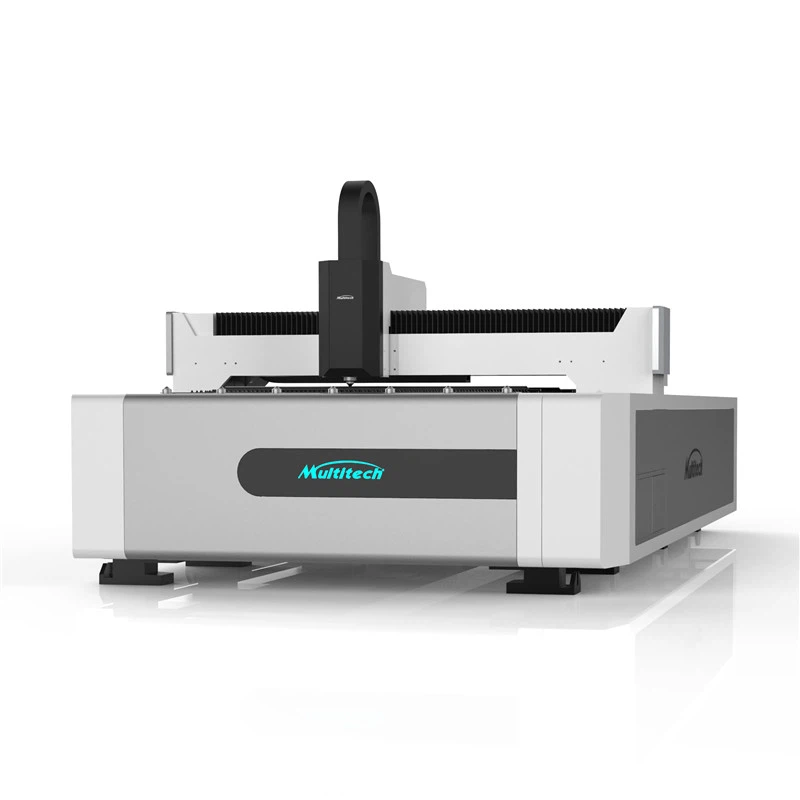
Fiber Laser Cutting Plate Machine
It can meet the parts processing requirements of most industries and has been widely used in home decoration, electronic parts, mechanical hardware, new energy, LED, automobiles and other industries.
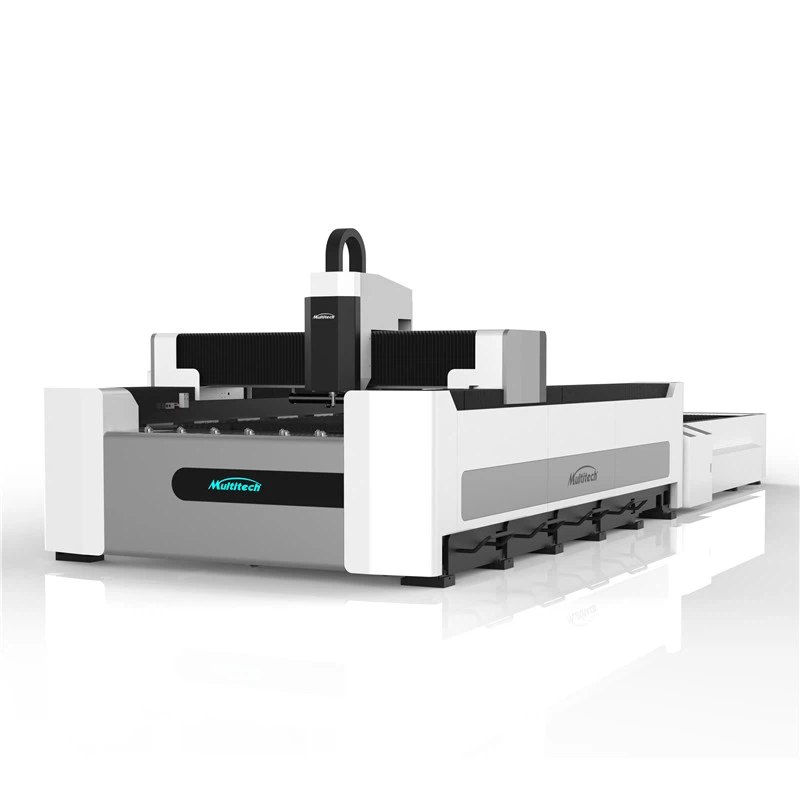
Dual Table Laser Metal Cutting Machine
Rapid exchange between two platforms greatly improves work efficiency.Platform exchange is controlled by the system.
What is Metal Laser Cutter
In the machining industry, metal laser cutting is an important subtractive manufacturing process that involves using a high-powered laser beam to cut through different types of metals with precision and accuracy. The laser beam is focused on the material, melting or vaporizing it and creating a clean and precise cut. Because laser cutting is a precise and accurate process, it can easily create parts with intricate details.
Flexibility
Laser cutting does not need tooling or an exchange of tools to achieve separate cuts. They require no hard tools, which means there is no need for tool changeover or sharpening in between cuts. And, the setup you start with is the same setup you can use to cut a variety of shapes within the same material thickness. Laser cutting machines are flexible and can achieve intricate cuts without costly downtime or inefficiencies - even in large production runs.
Precision
Accuracy is another advantage that laser cutting offers. When compared to other cutting methods, laser cutting can produce cuts within a smaller margin of error - having an accuracy of +/-0.1 mm. This allows manufacturers to create highly precise parts without the need for secondary services. In some cases, this high accuracy also means that no added tolerances are required.
Versatility
Some laser cutting machines are equipped with multi-axis layers. This mechanism allows them to cut a wide range of custom designs and shapes. And, they can cut materials of all different types and thicknesses - including other metals and alloys. These machines are capable of cutting even the most complex structures with ease.
Consistency
As laser cutters are highly precise and capable of working with a variety of materials, they can create parts and assemblies that are accurate and repeatable. You can ensure that the cuts will be exactly the same from the first part out of the machine to the thousandth part. This helps manufacturers create multiple copies of the same product, of the same quality, and in a consistent production flow.
Speed
Laser cutting - aside from being precise and reliable - can be done a lot quicker than other cutting methods (especially traditional and mechanical options). This advantage is particularly useful in the case of more complex cuts.
Automation
Using laser cutting also requires little manpower or human intervention to work properly. Thanks to technological advances, laser cutting machines are now highly automated. Nowadays, most machines are compatible with CNC CAD/CAM programs, feeding machines, and follow-up conveyors - which enhance their speed, precision, and consistency. While they still need experienced operators to ensure safety, proper cutting, and quality, there is now little need for manual labor throughout the entire process. Thus, laser cutting also has lower costs compared to other methods.
Reduced finishing requirements
Because laser cutters are highly precise machines, they tend to leave behind fewer surface imperfections (such as burrs). Edges made by laser cutters are smooth, and any burrs they leave behind are small and easy to remove.
Contactless cutting
When using a laser cutting machine, only the focused beam comes into contact with the workpiece. Therefore - unlike with mechanical machines - there is less friction and force that could wear down the laser cutting tools. And, given that it is a noncontact process, there is less workpiece distortion, warping, tearing, and other problems common with mechanical methods.
Energy usage
The efficiency and speed of laser cutting also lead to it using less energy overall when compared to other cutting methods. Typically, laser cutting machines will use around 10kW of power in one cutting session. Compared to the 50kW of power average of other cutting machines, laser cutting is more energy efficient by a landslide. Using a laser cutting machine is a great way to reduce your manufacturing project's energy consumption and make your process more cost-efficient.
Types of Metal Laser Cutter
Fiber laser cutters
Fiber lasers are known for producing narrower beams, thus providing about quadruple the effective power for the same laser output energy. They operate faster and with greater precision than their CO2 counterparts. Fiber laser cutting has lower operating costs due to electrical efficiency and solid-state construction, but they require more nitrogen shielding gas in the cutting process. They are suitable for high-precision cuts on thinner metal parts.
CO2 laser cutters
CO2 laser cutters deliver a wider cutter beam width and are capable of higher device power. They are better suited for lower-precision cuts on thicker parts. The initial cost of equipment (CAPEX) for CO2 lasers is lower than for fiber lasers, but operating costs (OPEX) are higher per length of cut.
Application of Metal Laser Cutter
Automotive sheet metal
The traditional sheet metal processing procedures are complex, and the cutting accuracy is low, the speed is slow, and the quality is uneven. The laser cutting machine has a high degree of flexibility, cutting sheet metal accurately and quickly, with good quality, and no tool wear, which improves the utilization of materials and realizes efficient processing.
Chassis cabinet
Including network cabinets, power cabinets, distribution boxes, etc. The traditional flatbed cutting efficiency is low, and the cutting precision is difficult to guarantee.However , the laser cutting machine cant take standardized processing for thin metal sheet, with efficient cutting and short production circle, it can improve the cutting speed and effectively saving the cost of labor and time.
Agricultural machinery
The traditional manufacture technique of sheet metal parts are complicated and the production efficiency is low. While the laser cutting machine is deeply loved by users with a series of characteristics such as high precision, high efficiency and precise cutting. The use of laser cutting machine can greatly save mold costs, flexible production, can adapt to various of plates and graphics; high cutting precision, fully meet the high- quality production requirements of agricultural machinery, maximize the utilization rate of plates, and save production costs, time-saving and efficient.
Advertising industry
It mainly includes metal characters, door heads, various display racks, signs and other products. The laser cutting machine has flexible cutting, fast speed, and fine finished products, without the need for secondary grinding. It can perfectly adapt to custom-made fonts of various shapes, with short production cycle, which makes it easier to win the favor of customers and consumers.
Fitness equipment
With the development and popularization of sports concept, the demand of community fitness facilities and gym equipment have gradually increased. To cope with the metal cutting of a large number of tubes and pipes, the using of fiber laser cutting machine has greatly improved the production efficiency, so we can easily meet the order needs.
Kitchenware
With people's living standards improved, more and more people are pursuing exquisite and high-quality kitchenware. The traditional cutting method is single, slow cutting speed and low-quality production. While the laser cutting machine can realize batch cutting of carbon steel, stainless steel, aluminum alloy and other metals, with fast speed, good quality, high output, and customized production according to user needs.
How Does the Metal Laser Cutter Work
Laser beams have a very high intensity, only one wavelength, and color. In a typical CO2 laser machine, this wavelength generates an infrared beam that is not visible to the human eye. The beam can be bounced in different directions by several mirrors or beam benders before focusing on the plate. The focused laser beam passes through a nozzle hole before starting to machine the plate. A compressed gas, such as oxygen or nitrogen, also flows through this nozzle hole.
The shape of the focal point and the intensity of the energy at that point must be precisely focused so that the cut is consistent and perfectly round. When cutting metal, the laser beam simply melts the material, and high-pressure nitrogen is used to blow the molten metal out of the slit.
The laser cutter moves the laser cutting head on the metal plate following the desired shape, thus allowing it to cut the piece from the plate. The capacitive height control system allows a very precise distance between the workpiece and the nozzle tip. This distance is important because it determines where the focus point should be placed relative to the plate surface. The cutting quality is affected by raising and lowering the focal point to just above the plate surface, the surface, or just below the surface.
Several other parameters affect cutting quality, and only if all parameters are properly checked laser cutting is a consistent, reliable, and very precise cutting process.
Components of Metal Laser Cutter

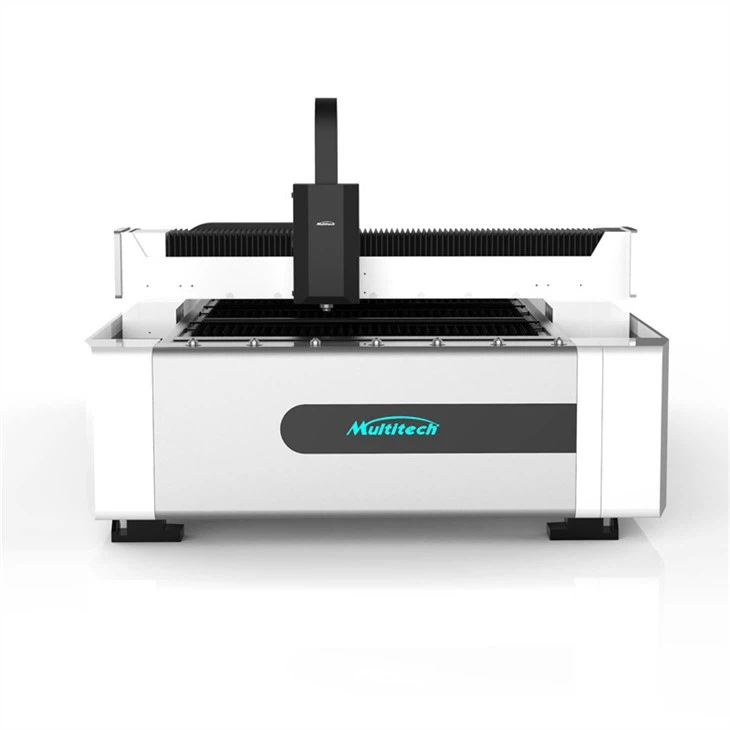

Machine bed part: The machine bed of the laser cutting machine, the mechanical part that realizes the movement of the X, Y, and Z axes, including the cutting work platform. It is used to place the workpiece to be cut, and can move correctly and accurately according to the control program, usually driven by a servo motor.
Laser generator: A device that generates a laser light source. For laser cutting applications, except for a few occasions where YAG solid-state lasers are used, most of them use CO2 gas lasers or fiber lasers with high electro-optical conversion efficiency and high output power. Because laser cutting requires high beam quality, not all lasers can be used for cutting. Gaussian mode is suitable for less than 1500W, low-order mode carbon dioxide laser 100W-3000W, and multi-mode above 3000W.
External optical path: Refraction mirror, used to guide the laser in the required direction. In order to prevent failure of the beam path, all mirrors should be protected by protective covers, and clean positive pressure protective gas should be introduced to protect the mirrors from contamination. A well-performing set of lenses will focus a beam with no divergence angle into an infinitely small spot. A 5.0-inch focal length lens is generally used. 7.5" lenses are only available for materials with thickness more than 12mm.
Numerical control system: Control the machine bed to realize the movement of X, Y and Z axes, and also control the output power of the laser.
Regulated power supply: Connected between lasers, CNC machine tools and power supply systems. It mainly plays the role of preventing external grid interference.
Cutting head: It mainly includes parts such as cavity, focusing lens holder, focusing mirror, capacitive sensor and auxiliary gas nozzle. The cutting head driving device is used to drive the cutting head to move along the Z-axis according to the program, and is composed of a servo motor and transmission parts such as a screw rod or a gear.
Operating table: Used to control the working process of the entire cutting device.
Chiller: Used to cool the laser generator. Laser is a device that converts electrical energy into light energy. For example, the conversion rate of CO2 gas laser is generally 20%, and the remaining energy is converted into heat. The cooling water takes away the excess heat to keep the laser generator working properly. The chiller also cools the external optical path reflector and focusing mirror of the machine tool to ensure stable beam transmission quality and effectively prevent the lens from being deformed or burst due to excessive temperature.
Gas cylinder: Including the working medium gas cylinder and auxiliary gas cylinder of the laser cutting machine, which are used to supplement the industrial gas for laser oscillation and the auxiliary gas for supplying the cutting head.
Air compressor, air storage tank: Provide and store compressed air.
Air cooling dryer and filter: used to supply clean dry air to the laser generator and beam path to keep the path and reflector working normally.
Exhaust dust collector: Extract the smoke and dust generated during processing, and filter it, so that the exhaust gas discharge meets the environmental protection standards.
Slag discharger: Remove the leftover material and waste generated during processing.
How to Maintain Metal Laser Cutter
Check the air outlet to remove dust and clean debris and other contaminants from blocking the machine's ventilation.
You need to do the same with the filters that connect and deliver gas to the machine. It is a good idea to check and remove water and other types of debris build-up that can block that filter.
Daily use can cause some screws to come loose little by little. Because of this, it will help your laser-cutting machine if you check the screws, especially the bumper bracket and those around the travel switch bracket if they are coming loose. If they are, tighten them down.
Locate the ventilation fan's filter screen of your machine's electric control cabinet. As the filter is meant to keep dust from entering the panels and managing the temperature, you need to clean them to ensure adequate airflow in your machine.
Regular operation of your laser-cutting machine can cause your guide rail to accumulate many types of debris. Every week, you can check and clean the debris that could get stuck in the cavity of your guide rails. This will ensure smooth movement, prolong your rail's life, and ensure your laser light is on point.
Once a week, it helps to check if your machine is still level on the ground. Remember that constant operation could cause it to make minor movements now and then. The movement of either the laser head or the bed is usually the cause for these slight machine movements. Over time, this can all add up and misalign your whole machine and could affect your laser beam.
Regarding movement, proper maintenance means lubricating lead screws and guides of your x-axis and y-axis points (even the z-axis). This lowers the friction along your screws and axis guides. It will also extend the operational life of your machine.
Check the focusing lenses as well and clean them regularly. This can help improve your laser's beam quality. If your focusing lens is clean, you also help prevent costly repairs in the future.
Make a visual check of the mirrors in the laser tube to ensure they are clean and free from contaminants. If they are beyond repair for any machine tool, replace them immediately before using the machine again.
Look at the filter of your laser's gas drying unit. Remember that the normal color of this filter is blue. If it is any other color, replace it immediately.
Brief History of Metal Laser Cutting
In 1965, the Western Electric Engineering Research Center began using laser cutting technology for drilling in diamond dies. Shortly after that, scientists created the laser cutting method with carbon dioxide. This advancement increased the versatility of laser cutting. The development of lasers that can cut through metals like mild steel was critical to the mass adoption of the technology.
In 1969, Boeing was the first business to employ gas laser cutting commercially. The employees of this company wrote a paper mainly discussing the concept of using a carbon dioxide laser to cut titanium, Hastelloy, and ceramic. This paper resulted in the development of multi-beam laser cutting, and Boeing began employing laser beams as an efficient cutting method on its production lines.
During the 1970s, Western Electric began mass-producing cutting machines widely employed in the aerospace sector.
During the 1980s, the usage of gas laser cutting became common. During this time, it is estimated that 20,000 industrial laser cutters were in service. Laser cutting changed manufacturing industries to an extent, and their development heralded the start of a new industrial revolution.
In 1979, Prima Industrie of Collegno, Italy, developed a 3D laser cutting process that vastly enlarged the possible uses of laser cutting technology. Laser power is now widely employed in several sectors, notably vehicle manufacturing.
Certifications

Our Factory


FAQ
Hot Tags: metal laser cutter, China metal laser cutter manufacturers, suppliers, factory, 3000*1500mm Metal Laser Cutter, 12kw fiber laser cutting machine, Fiber Laser Cutting Machine, Fiber Laser Metal Cutter Machine, CNC Laser Cutting Machine Sheet Metal, Full Automatic Fiber Laser Cutter
Send Inquiry
