

Hey there! As a supplier of full automatic fiber laser cutters, I often get asked about the difference between full automatic and semi - automatic fiber laser cutters. So, let's dive right in and break it down.
1. Operation Process
The most obvious difference between the two lies in the operation process. A semi - automatic fiber laser cutter requires a fair amount of manual intervention. You see, when using a semi - automatic cutter, an operator has to be hands - on at several stages. For example, loading the material onto the cutting bed is usually a manual task. The operator needs to carefully position the metal sheet or whatever material they're working with to ensure accurate cutting.
Once the material is loaded, the operator also has to set up the cutting parameters. This involves inputting details like the thickness of the material, the type of metal (such as steel, aluminum, or Stainless Steel Fiber Cutting Machine), and the desired cutting speed. It's a bit like driving a manual car where you have to shift gears at the right time.
On the other hand, a full automatic fiber laser cutter is like an autopilot for cutting. The whole process is highly automated. The material loading is often done by a robotic system. These robots can precisely place the material on the cutting bed, eliminating the risk of human error in positioning.
When it comes to setting cutting parameters, full automatic cutters use pre - programmed software. You just need to select the job from a database, and the machine will automatically adjust all the necessary settings. It's as easy as choosing a song on your playlist. This not only saves a lot of time but also ensures consistent results across multiple cuts.
2. Precision and Accuracy
Precision is crucial in laser cutting, especially when you're working on intricate designs or high - quality products. Semi - automatic fiber laser cutters can achieve good precision, but they are more prone to human error. Since the operator is involved in positioning the material and setting parameters, small mistakes can lead to deviations in the final cut.
For instance, if the material is not placed exactly in the right position, the cut might be off by a few millimeters. Also, if the cutting speed is not set correctly, it can result in rough edges or uneven cuts.
Full automatic fiber laser cutters, however, offer a much higher level of precision. The robotic material handling systems ensure that the material is always in the right place. And the pre - programmed software calculates the optimal cutting parameters based on the material properties and the design requirements. This means that every cut is consistent, whether you're making one piece or a thousand. It's like having a master craftsman who never makes a mistake, working 24/7.
3. Production Efficiency
In terms of production efficiency, there's a significant gap between semi - automatic and full automatic fiber laser cutters. Semi - automatic cutters are slower because of the manual steps involved. Loading the material, setting parameters, and even changing the cutting tool (if necessary) all take time.
Let's say you're running a small - scale workshop and you need to cut 100 pieces of a particular design. With a semi - automatic cutter, you'll have to manually load each piece, set the parameters for each batch, and monitor the cutting process closely. This can take hours, depending on the complexity of the design.
Full automatic fiber laser cutters, on the other hand, are designed for high - volume production. They can run continuously with minimal human intervention. Once the initial setup is done, the machine can cut multiple pieces in a short period. For example, the same 100 - piece job that might take hours with a semi - automatic cutter can be completed in a fraction of the time with a full automatic one. This makes them ideal for large - scale manufacturing operations.
4. Cost
Cost is always a major consideration when choosing a laser cutter. Semi - automatic fiber laser cutters are generally cheaper to purchase. They have a simpler design and require less advanced technology, which means a lower upfront cost. This makes them a popular choice for small businesses or startups with a limited budget.
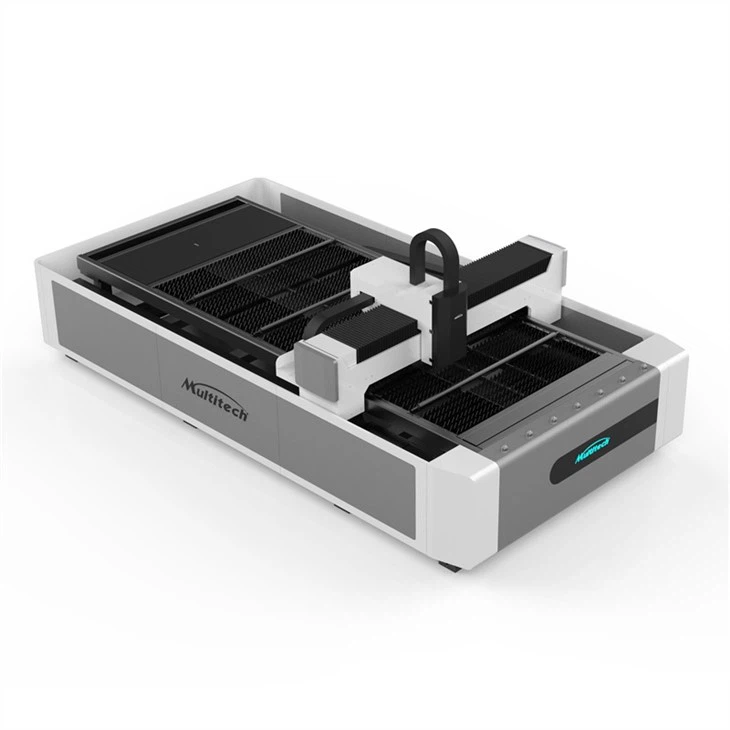

However, when you factor in the long - term costs, the picture changes. Semi - automatic cutters require more labor. You need an operator to be present at all times to handle the manual tasks. Over time, the cost of labor can add up significantly.
Full automatic fiber laser cutters, although more expensive to buy initially, can save you money in the long run. They reduce the need for manual labor, which means lower labor costs. Also, their high efficiency means that you can produce more in less time, increasing your overall productivity and profitability.
5. Flexibility
Semi - automatic fiber laser cutters offer a certain degree of flexibility. Since the operator has more control over the process, it's easier to make on - the - fly adjustments. For example, if you notice that the cut is not going as expected, you can quickly change the cutting speed or the position of the material. This makes them suitable for small - batch production or jobs that require a lot of customization.
Full automatic fiber laser cutters, while highly efficient, are a bit less flexible in terms of immediate changes. Once a job is programmed, it's designed to run as is. Making significant changes during the cutting process can be more complicated and time - consuming. However, they are very flexible in terms of handling different types of jobs. You can easily switch between different designs by simply selecting a different program from the database.
6. Maintenance
Maintenance is another important aspect to consider. Semi - automatic fiber laser cutters are generally easier to maintain. Since they have a simpler design, there are fewer components that can go wrong. And because the operator is more involved in the process, they can often spot small issues early on and address them before they become major problems.
Full automatic fiber laser cutters, with their complex robotic systems and advanced software, require more specialized maintenance. You need trained technicians to handle any issues that arise. However, most modern full automatic cutters come with built - in diagnostic systems that can detect problems and provide detailed reports. This makes it easier to schedule maintenance and keep the machine running smoothly.
Conclusion
So, to sum it up, the main differences between full automatic and semi - automatic fiber laser cutters lie in the operation process, precision, production efficiency, cost, flexibility, and maintenance. If you're a small business with a limited budget and need to do a lot of custom work, a semi - automatic cutter might be the right choice for you. But if you're looking for high - volume production, consistent quality, and long - term cost savings, a full automatic fiber laser cutter is the way to go.
As a supplier of full automatic fiber laser cutters, I can offer you a wide range of CNC Fiber Laser Cutter for Metal and CNC Fiber Laser Cutting Machine options to suit your specific needs. If you're interested in learning more or discussing a potential purchase, don't hesitate to reach out. We can have a detailed chat about how our machines can benefit your business.
References
- Industry reports on laser cutting technology
- Manufacturer's specifications for fiber laser cutters
- Case studies on the use of semi - automatic and full automatic fiber laser cutters in different industries