
Jinan Itech Machinery - a Professional Metal Sheet Laser Cutting Machine Manufacturer
Founded in 2003, we are a high-tech enterprise integrating R&D, design, production, maintenance and marketing. We have a high level of professionalism and service system.
Variety of Products
We can provide customers with fiber laser cutting machines, plasma cutting machines, metal plate laser cutting machines, plate and pipe laser cutting machines, pipe laser cutting machines, enclosed fiber laser cutting machines and other products. They can be used for cutting a variety of plates and pipes.
Rich Market Experience
Our products are sold to more than 120 countries and regions including the United States, Canada, Australia, Europe, Southeast Asia, and Africa. At the same time, we have provided OEM services to more than 30 manufacturers.
Professional Service
We provide 24-hour service, 365 days a year, including design, installation, training and maintenance. We provide pre-sales and mid-sales services in a one-to-one model by professional sales managers. For after-sales service, we also have English-speaking engineers in a one-to-one model.
Multiple Honors
In 2013, our company was awarded the title of "Advanced Woodworking Machinery Manufacturing Enterprise" by the China Machinery Industry Association. In 2016, we were rated as "Service Star of International Trade Industry" by Shandong Provincial International Trade Organization.
-

Industrial Laser Cutting Machine
A laser cutting machine is often used in engineering for the precision cutting of components of Add to Inquiry -
Industrial Fiber Laser Cutting Machine
Fiber laser cutting is a type of laser cutting that uses a high-power laser beam focused through a Add to Inquiry -
Industrial CNC Laser Cutting Machine
A laser cutter is a machine that uses a high-energy focused laser beam to cut into various plate or Add to Inquiry -
2000W Fiber Laser Cutting Machine
Fiber laser cutting machine uses a type of solid-state laser to melt and pierce metals, achieving a Add to Inquiry -
2 KW Laser Cutting Machine
The laser cutting machine emits a high powered laser beam to either cleanly cut or etch a specific Add to Inquiry -
1500W Fiber Laser Cutting Machine
Fiber laser cutting machines are known for their high precision, speed, and versatility. They can Add to Inquiry -
Metal Laser Cutter
In the machining industry, metal laser cutting is an important subtractive manufacturing process Add to Inquiry -
Fiber Laser Cutting Machines
At its core, a fiber laser cutter is a highly specialized device that uses laser technology to Add to Inquiry -
CNC Laser Cutting Machines
CNC laser cutting is a non-contact, thermal-based process. A CNC laser cutter features a laser head Add to Inquiry -
CNC Fiber Laser Cutting Machine
One of the most recent advanced technologies in laser cutting is CNC fibre laser cutting. In this Add to Inquiry -
Steel Laser Cutter
Working area:1300*2500mm/1500*3000mm/1500*4000mm/1500*6000mm(the working area can be customized by Add to Inquiry -
Metal Laser Cutter
Working area:1300*2500mm/1500*3000mm/1500*4000mm/1500*6000mm(the working area can be customized by Add to Inquiry


Brief Introduction to Metal Sheet Laser Cutting Machines
Metal sheet laser cutting machines are one of the standard methods of cutting and removing components from workpieces. This device is based on computer numerical control (CNC) technology and therefore has impeccable precision. Before performing a CNC cutting or laser cutting operation, the operator must enter a code or program for a detailed design or pattern into the computer. Unlike other laser machines, it has fewer moving parts, which means time and energy savings.
Parts of Metal Sheet Laser Cutting Machines
The metal sheet laser cutting machine consists of multiple parts, as follows:
*Fiber Laser: The core fiber laser cutting component is the source of power, and its photoelectric conversion efficiency is high.
*Laser Head: It is a laser output device with a nozzle, focusing lens and focus tracking system.
*Laser control board: It controls the operation of the machine tool, realizes the movement of the X, Y, and Z axes, and controls the output power of the fiber laser.
*Laser Cutting Bed: As the rotation system of the laser cutting machine, this part mainly includes the bed, beam, workbench, Z-axis system, pneumatic control system, electric control system, transmission system, protective shell, safety system, etc.
*Water Cooler: Cooling device can quickly and efficiently cool lasers, spindles and other equipment.
*Air Supply System: This part includes air source, filter device, pipes, etc. Gas sources include bottled gas, liquefied gas, and compressed air.
*Servo Motor: Servo motor can accurately control speed and position accuracy, and convert control signals into speed and position to drive control objects.
*Cylinder: It serves as a medium-sized gas cylinder and auxiliary gas cylinder to provide auxiliary gas for industrial gases and cutting heads.
*Air Compressor: This section supplies and stores compressed air.
*Air-cooled Dryer and Filter: It is used to provide clean, dry air to the laser generator and optical path to maintain the normal operation of the optical path and reflector.
*Dust Collector: It is used to extract and filter smoke and dust during processing to make exhaust gas emissions meet environmental protection standards.
*Exhaust Fan: It is used to remove scraps and scraps produced during processing.
*Power Supply: The power system connects the laser, CNC machine tool, and power supply system. It is mainly used to prevent external grid interference.
Features of Metal Sheet Laser Cutting Machines

Zero-Deformation Cutting
Laser cutting machines for sheet metal do not apply force, so there is no shear, pressure or wear deformation of the material involved.

First new product launch in 2023
In order to be effective, other processes that use heat (plasma cutting, gas torches) cause localized heating or even require the target to be preheated. But laser cutting vaporizes the cut path before much of the heat is conducted to the surrounding material.

First new product launch in 2023
When the optics are kept in good condition, no dulling occurs during the cutting process, so the last inch of the cut is the same as the first.

Sharp Turns and Smooth Radii
Unlike guillotine or shear cutting, sheet laser cutting machines for metal can open to a point or follow any desired curvature.

Fast Processing
The closest "zero force" analog to laser cutting is wire EDM, but sheet metal laser cutting machines can process faster.

Discontinuous Cutting
Stopping and starting a cut simply requires turning off the beam and repositioning the optics. This device can disconnect functionality without interfering with processing.
Advantages of Metal Sheet Laser Cutting Machines
1
High-Precision and Accuracy: Laser cutting is ideal for sheet metal cutting due to its extremely high precision. These machines are capable of performing complex cuts with extreme precision and accuracy. Industrially, laser cutting is the technology of choice for cutting sheet metal with specific details requiring tight tolerances. Some cutting machines can make precise cuts with an accuracy of up to 0.0005 inches. Because the laser melts the metal part, the cutter produces little to no burrs. Instead, it leaves a clean, smooth, and sharp edge.
2
Automated Process: Metal sheet laser cutting machines are run by computer numerical control (CNC) systems. Once the technical operator enters the program into the computer, the process operates independently. Therefore, it requires less human interference and overall labor. Additionally, with increased cutting efficiency, there is little room for error.
3
Damage Prevention: There is a common belief that laser cutting metal causes warping. However, this is incorrect. The heat generated by laser cutting only affects tiny parts of the material and does not affect tolerances. And the laser cutting process is fast, the laser only heats and melts the part to be removed. Therefore, the heat does not significantly affect other parts of the material. In most cases, the material will not deform or warp.
4
Compatible With Most Materials: Another key advantage of metal sheet laser cutting machines is that they are suitable for a wide range of materials. It can cut through a variety of materials with ease, whether it’s copper, aluminum, stainless steel, or even titanium. Because it involves using lasers at very high temperatures to melt materials.
5
Relatively Low Cost: In fact, laser cutting machines are expensive. However, it is more cost-effective compared to other CNC machines. It's perfect for all your cutting operations, so you don't need to make any modifications to the machine for different cutting operations. The device does not come into contact with the material you are cutting, so there is little to no friction and no surface wear. Additionally, it does not have multiple parts, so it requires less maintenance and upkeep.
6
High Versatility: In addition to their compatibility with most materials, sheet laser cutting machines for metal are also highly versatile. Unlike other equipment, you can use a laser cutter for a variety of cutting capabilities, from simple to complex cuts and cuts that require tight tolerances and complex designs. This feature makes it an excellent choice for most industries.
7
Low Energy Consumption: Metal sheet laser cutting machines require electricity to effectively heat and melt the material during the cutting process. However, this cutting technology is more energy efficient than other cutting methods. In addition, the machine's high efficiency means fast cutting, saving time and energy.
What Metal Materials Can be Cut by the Metal Sheet Laser Cutting Machine?
One of the main advantages of a metal sheet laser cutting machine is that it can cut almost any material, from thin to thick metal, wood, and certain types of plastic. Here are typical metals it can cut:

01
Stainless Steel
Stainless steel, especially the austenitic steels 304 and 316, are one of the most popular choices for the laser cutting process. Stainless steel contains high amounts of chromium, which makes the material highly corrosion-resistant, durable, strong, weather-resistant, and even suitable for outdoor use. Additionally, the nickel content makes the steel easier to cut than mild steel. It allows for very smooth edges and small radius cuts. Stainless steel is often used in industries that require a high-quality finish.
02
Mild Steel/ Low Carbon Steel
Low carbon steel, also known as mild steel, is the most common steel at present, with a carbon content of about 0.05-0.25%. It is the standard choice for laser cutting structural shapes, brackets and general fabrication when high strength is not required. Mild steel is a cost-effective material with good machinability, weldability, ductility and relatively low tensile strength. Although mild steel is cheap and easy to shape, it tends to make laser cutting more difficult.


03
Aluminum
Aluminum is a lightweight metal that can be efficiently processed by the laser cutting process. Some non-heat treatable materials, such as 5052 and 6061, are widely used for laser cutting. Its highly reflective properties allow for faster cutting, but the cut edges are susceptible to oxidation. As with all metal laser cutting, scratches on aluminum are inevitable. In this case, using varnish or light oil on the surface to avoid sharp edges and severe friction on the surface of the material will be a solution. Although scratches on the back of sheets are common, they can be easily removed with a light abrasive.
04
Titanium
Although cutting titanium can be challenging, laser cutting can be used for precise and complex cuts. Due to its high strength and lightweight properties, titanium is commonly used in aerospace, medical, marine and automotive applications.


05
Copper
Copper is known for its excellent electrical conductivity and is used in electrical and plumbing applications. It can laser cut efficiently, but a higher power laser may be required due to its thermal conductivity. In general, copper discoloration problems can be alleviated using fiber lasers. When this metal is laser cut, it is common in applications such as electrical contacts and heat exchangers.
06
Brass
Brass is a copper-zinc alloy, and increasing the zinc content improves strength and ductility. It can be cut using a metal sheet laser machine with good results. Some common uses for brass include costume jewelry, locks, hinges, gears, bearings, hose fittings, ammunition casings, car radiators, musical instruments, electronic packaging, and coins.


07
Tool Steel
Air-hardenable grades such as D2 and A2 can be laser cut, but their extreme hardness requires a high power density CO2 laser. Tool steel is used in cutting tools, punches and dies. However, cutting parameters must be carefully controlled to prevent breakage.
How to Choose the Right Sheet Metal Laser Cutting Machine?
How to Choose the Right Sheet Metal Laser Cutting Machine?
simulator
Lorem ipsum dolor sit amet consectetur, adipisicing elit. Recusandae quaerat modi iusto rem esse obcaecati quidem voluptatum maxime veniam maiores asperiores fugit reiciendis, quasi labore nobis quam eligendi ducimus excepturi?
Workload Level
You should consider the amount of cutting you plan to make with your sheet metal laser cutting machine. The bed size of your laser machine determines the amount of work you can do with it. The larger the size, the more work you can accomplish. Since bed dimensions are permanent and cannot be changed later, you must consider them carefully.
Optical Quality
The performance and quality of a laser machine largely depends on the quality of the optics. An important part of the process is the focusing of the laser optics. It is necessary to focus the laser beam after a certain number of working cycles. Some machines do it mechanically, while with others you have to do it manually. Talk to an expert or a different manufacturer about this important feature.
User Convenience
The laser cutter you are about to purchase should have an easy-to-understand user manual. This way, you can learn how to operate the machine and how to perform maintenance. Don’t forget to ask about the machine’s software programs and interface before deciding to buy.
Overall Equipment Efficiency
The OEE metric calculates the percentage of manufacturing time that is truly efficient. Through overall equipment efficiency, you'll gain important insights into how to systematically improve your manufacturing processes. OEE is the standard for identifying losses, measuring progress, and eliminating waste.
Compatibility
We emphasized the importance of the new machine's adaptability to other equipment in the factory. It’s important to discuss how best to customize different types of technology in your facility with a trusted professional. Test on multiple machines at the same speed and with the same material thickness. This way, you can decide which machine offers the best quality.
Safety Tips on Metal Sheet Laser Cutting Machines
1. Make Sure You’ve Been Properly Trained
Proper training is key when using a laser cutter. Laser cutters contain hazardous parts and it is important to know and understand the risks. Metal sheet laser cutting equipment manufacturers can often provide training. In addition to detailed machine-specific procedures and interlocks, training should also cover the general hazards of laser cutting. New operators must also undergo regular training and refresher courses.
2. Never Circumvent Safety Interlocks Built Into the Cutter
Safety interlocks in laser cutting machines are an integral part of their functionality. The laser itself is usually a Class 3B or Class 4 laser. These categories are powerful enough to cause eye injury if viewed directly (and sometimes even indirectly) and may result in skin damage or fire. However, because laser cutters have built-in interlocks, they are often sold as Class 1 laser products. This means they comply with international safety regulations to prevent users from being exposed to dangerous lasers. The first line of defense is usually an interlock with the machine lid - the laser will not fire when the lid is open. If this interlock is bypassed or manipulated, you risk exposure to dangerous laser light that could injure your eyes or skin.
3. When Operating a Laser Cutter, Always Follow the Manufacturer's Instructions
Manufacturers of laser cutters know the limitations and inherent risks of their designs. Every laser cutting machine will include certain interlocks and design features designed to ensure the safety of both the user and the equipment. After purchasing a new cutting machine, be sure to read the safety and operating instructions. If the manufacturer recommends limitations or highlights specific risks, it is important to note and follow these guidelines. If you ignore them and operate outside of the manufacturer's guidelines, you risk voiding your warranty, damaging your equipment, and injuring yourself or others.
4. Keep a Logbook Detailing Who Has Used the Laser Cutter, the Cutting Time, and the Materials Cut
Keeping a log of what material has been cut and by whom is important for safe operations. Some materials may leave flammable residues. Additionally, if you notice anything unusual when inspecting your cutting machine, you can consult with the person who last used the machine so the new operator knows what was last in the machine. It is also important to keep a log of laser operating hours so that your shop can perform scheduled maintenance on schedule.
5. A Fire Extinguisher Should Be Mounted on the Wall Near the Laser Cutter
Fire is always a risk when operating a laser cutter. Some materials catch fire more easily than others. Because lasers are designed to melt, vaporize, or burn materials, fires are most likely to occur. Fire extinguishers must be visibly installed close to the laser cutting machine and within easy reach. It is also important that access to the fire extinguisher is not blocked by clutter on the floor or by placing another machine in front of the fire extinguisher.
6. Vacuuming the Cutting Deck and the Internal Cavity of the Laser Cutter on a Regular Basis Is Critical for Fire Prevention!
Dust accumulation inside the laser cutting machine housing can significantly increase the risk of fire. Dust particles are naturally very small and therefore have a large surface area to volume ratio. This keeps a large amount of air (and oxygen) in contact with the particles. Therefore, dust ignites more easily than a solid block of the same material. To avoid the risk of dust igniting, you must regularly clean the inside of your laser cutter as well as the cutting plate and anywhere else where dust may collect. You can also use air assistance to quickly blow away dust and smoke that can easily ignite.
Tips to Regular Maintenance of Metal Laser Cutting Machine
Daily Inspection and Maintenance
*Before starting up every day, carefully check the pressure of the laser working gas and cutting gas. If the gas pressure is not enough, replace it in time.
*Check whether the buttons of X-axis zero point, Y-axis zero point, Z-axis zero point, laser preparation status, etc. are damaged, (check indicator light).
*Check whether the zero points of the X-axis, Y-axis, and Z-axis, the limit switch, and the mounting screw of the striker are loose and whether the limit switch of each axis is sensitive.
*Check whether the circulating water level in the chiller is sufficient, if not enough, it must be added in time.
*Check whether there is any leakage in the external optical circuit circulating water, and the leakage must be dealt with in time, otherwise, the life of the optical lens will be affected.
*After cutting every day, check the focus lens for damage.
*Check whether the telescopic cavity of the outer optical path is burned or damaged.
*After the daily work is completed, timely clean up the cutting waste, clean the work site and keep the worksite tidy and clean. At the same time, do a good job of cleaning the equipment to ensure that all parts of the equipment are clean and free of stains, and no debris can be placed on all parts of the equipment.
*After the daily work is completed, open the drain valve of the air storage cylinder at the bottom of the air compressor to drain, and close the drain valve after the wastewater is drained.
*After the daily work is completed, shut down according to the shutdown procedure, and then turn off the total power supply of the entire machine too.
Weekly and Irregular Maintenance
*Regularly clean up the debris at the exhaust vent to ensure the exhaust effect.
*Regularly check the filter in the air path, and remove the water and debris in the filter in time.
*Regularly check whether the screws of the limit switch bracket and the striker bracket are loose.
*Clean the dust on the ventilation fan filter of the electric control cabinet in time to ensure good ventilation to facilitate the heat dissipation of the internal electrical components.
*Clean up the sundries in the protective skin cavity of the guide rails in time to avoid damaging the guide rails and prolong the service life of the guide rails.
*After the machine tool is installed and used for a period of time, the level of the machine tool should be readjusted to ensure the cutting accuracy of the machine tool
*Every other week, the X-axis guide rail and lead screw, Y-axis guide rail and lead screw, Z-axis guide rail and lead screw must be checked for lubricating oil filling.
*According to the environment of the workshop, check the contamination of the reflector and focusing mirror surface irregularly (at least once within a month), and clean the optical lens in time to ensure its service life.
Maintenance of Optical Lens in the External Optical Path
*Do not touch the surface of the optical lens (reflector, focusing lens, etc.) directly with your hands, as this will easily cause scratches on the mirror surface. If there is oil or dust on the lens surface, it will seriously affect the use of the lens, and the lens should be cleaned in time.
*It is strictly forbidden to use water, detergent, etc. to clean the optical lens. The surface of the lens is coated with a special film. If you use these to clean the lens, it will damage the surface of the lens.
*Do not place the lens in a dark and humid place, as this will cause the surface of the lens to age.
*The surface of the lens is stained with dust, dirt, or water vapor, which can easily absorb the laser and cause damage to the coating of the lens, and in the worst case, no laser beam will be produced.
*When the lens is damaged, you should contact the after-sales service department for repair in time. Try not to use the damaged lens, otherwise, it will accelerate the damage to the repairable lens.
*When installing or replacing the reflector or focusing lens, do not use too much pressure, otherwise, it will cause the deformation of the lens and affect the quality of the beam.
Daily Maintenance of Laser Generator
The laser should be maintained before starting daily.
*Inspection of laser working gas and cutting gas: check the gas cylinder of laser working gas
*Check that the cooling water pressure is maintained between 3.5 and 5 Bar.
*Check the temperature of the cooling water, the temperature of the water required by the selected laser is better.
*Check the oil level in the laser vacuum pump. If it is not enough, add it.
*Check whether the laser oil circuit, water circuit, and gas circuit are leaking and whether the pneumatic components and pipe joints of the vacuum pump and resonant cavity are leaking.
Weekly Maintenance of Laser Generator
*Check whether there is oil or water in the gas mixing unit of the laser, and clean it in time if there is any.
*Check the laser gas drying filter, if more than 1/4 of the color becomes red or white, it needs to be replaced, and its normal color is blue.
*Check the oil level of the vacuum pump and pump. If it is not enough, add it.
*Check the filter of the chiller for impurities.
*Check for impurities in the laser cooling water circuit.
*Check the condensate water level in the compressed air separator (located in the air supply unit). Check the oil level of the vacuum pump (located under the air supply unit). When the pump is in a cold state, the oil level should be between +5mm-0mm of the middle line of the oil window and refuel when necessary.
Maintenance of Air Compressor
*Before all maintenance operations, the air compressor must be turned off and the compressed air in the air tank must be drained;
*Drain 3 - 8 times a day (depending on the air humidity), and drain the air and water in the air storage tank after getting off work;
*Clean the air filter every half month (the cleaning cycle should be shortened if the working environment is bad);
*The filter element should be replaced every 1200 hours of work, all parts should be checked and cleaned, and the valve disc should be replaced if necessary.
*Oil-free air compressors need to add grease to the crankshaft bearing in the compressor head every 1000 hours of operation;
*Clean the air filter every half month (the cleaning cycle should be shortened if the working environment is bad);
*Refer to the air compressor manual.


Maintenance of Refrigeration Dryer
*Drain 3 - 8 times a day (depending on the air humidity), and drain the air and water in the machine after getting off work;
*Clean the air filter element once a month;
*Dust and clean the condenser fins once a month;
*Replace the air filter element every six months.
Maintenance of Regulated Power Supply
*After the new stabilized power supply has been running for one month, cut off the main power supply and re-tighten all the connecting terminals in the stabilizer, especially the main circuit;
*Check the elasticity of the sliding carbon brush every three months, and use dry compressed air to blow away the carbon powder and dust adhering to the components in the regulator.
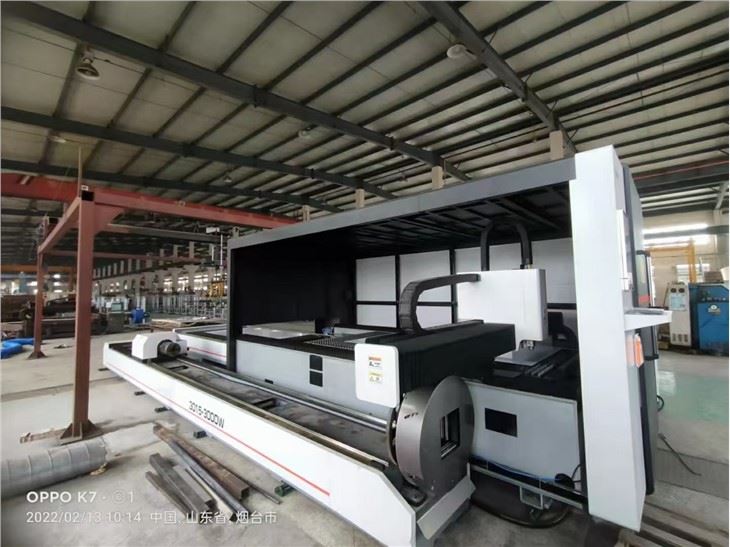

Production Equipment
The picture below is our production equipment:
Frequently Asked Questions
Q: Will a metal sheet laser cutter damage my material?
A: No, although many people believe that the high temperatures of laser cutting can damage materials. However, laser cutters are very precise and work at incredible speeds, so the beam only melts the part you want to cut. Additionally, high speed means your materials are not exposed to high temperatures for too long.
Q: What is the best laser cutter for sheet metal?
A: The best laser-cutting machine for metal is the CNC Fiber Laser Cutting Machine. This laser is powerful enough to engrave stainless steel, aluminum, copper, gold, silver, and plastic.
Q: Can a laser cutting machine cut metal sheets?
A: Yes, laser cutting machines have excellent compatibility with most materials, especially sheet metal. However, when working with thick metal, you may want to consider other cutting techniques.
Q: How powerful of a laser to cut sheet metal?
A: The power needed can range from a few hundred watts to several kilowatts. For example, thin aluminum sheets (up to 3 mm or 0.12 inches) require a laser power of at least 500 W for 3 mm sheet and pro-rata for thinner material.
Q: How thick can you laser cut sheet metal?
A: Generally, when laser cutting metals with fiber lasers, the upper limit on thickness of the metal sheet to be cut is around 20 - 25 mm for mild steels. Above this thickness, higher power CO2 lasers are used but with specialized fiber lasers for a higher price, it is possible to cut thicker plates than this.
Q: What materials should never be cut with a metal sheet laser cutter?
A: Examples include cork tiles, thin wood laminates, acrylic tiles and paper stickers. Never cut these materials with a laser cutter if they have this backing. The glue can evaporate, forming a coating on the lens, covering it, clouding it, heating it, and potentially cracking the lens.
Q: How thick of steel can a 1000w laser cut?
A: Generally, the 1000w fiber laser cutting machine can cut carbon steel plates of about 10mm, and stainless steel plates are slightly difficult to cut.
Q: What can the 1000w metal sheet laser cutting machine cut?
A: The 1000w fiber optic metal sheet laser cutting machine can cut: stainless steel with a maximum thickness of 10mm; aluminum with a maximum thickness of 8mm; brass with a maximum thickness of 6mm; carbon steel with a maximum thickness of 20mm.
Q: How thick of steel can a 6000-watt metal sheet laser cutting machine cut?
A: Take carbon steel cutting as an example. The 4,000-watt laser can process carbon steel up to 1.0 inches thick, and the 6,000-watt laser can process carbon steel up to 1-5/8 inches thick.
Q: What is the minimum wattage required for a metal sheet laser cutting machine?
A: In order to achieve effective metal cutting, the laser cutter must have a minimum power supply of 150W, supplemented by air assist to ensure that the laser beam is powerful enough to pass through it.
Q: What type of laser is used for metal sheet laser cutting machines?
A: In many ways, fiber lasers are the best choice. Key factors underpinning its commercial viability include delivering high throughput, excellent accuracy, operational and electrical efficiency, and low maintenance costs.
Q: What is the difference between fiber laser cutting machine and CO2 laser cutting machine?
A: Fiber laser cutting machines require no beam path maintenance, such as mirror or lens cleaning, bellows inspection, and beam alignment. For a CO2 laser, this would be an additional 4 or 5 hours per week. Fiber lasers have a fully sealed fiber beam path at both the power source and the fiber delivery of the cutting head.
Q: Can the fiber optic metal sheet laser cutting machine cut galvanized steel?
A: Yes, galvanized steel is available in sheet form in various thicknesses and can therefore be easily cut with a laser cutter.
Q: What can’t a fiber optic metal sheet laser cutting machine cut?
A: Most unsuitable materials will chemically react and burn rapidly at such high temperatures. These include non-metals such as glass, fiberglass, polyvinyl chloride, polycarbonate, high-density polyethylene and polystyrene foam.
Q: Can the fiber optic metal sheet laser cutting machine laser cut PVC?
A: While polyvinyl chloride (PVC) can actually be cut with a laser, the heat treatment process produces hydrochloric acid and toxic fumes. Therefore, we recommend that you do not use a laser to cut PVC to prevent corrosion of the laser system and ensure the safety of machine operators.
Q: What is the thickest material a laser cutter can cut?
A: The largest laser cutting machines can cut steel, 100 mm thickness, at up to 100 mm/s feed. With the selection of the right methods, even the most difficult materials, such as stainless steel, can be cleanly cut.
Q: Why can't fiber optic metal sheet laser cutting machines cut wood?
A: The 1064nm wavelength of a fiber laser is partially transmitted through organic structures (such as wood) due to its shorter wavelength. However, when the beam enters wood, its absorption cannot be controlled. This reaction is caused by differences in the wood material. The heat gradually increases and eventually the wood will ignite.
As one of the most professional metal sheet laser cutting machine manufacturers and suppliers in China for over 15 years, we're featured by good service and punctual delivery. Please rest assured to buy customized metal sheet laser cutting machine at competitive price from our factory.
12kw fiber laser cutting machine, Fiber Laser Sheet Metal Cutting Machine, 3000*1500mm Fiber Laser Cutter